





.jpg#/media/File:Poster_of_Ramona_(1928_film).jpg)
.jpg#/media/File:Poster_of_Ramona_(1936_film).jpg)


Ramona (1928 Song)
From Wikipedia, the free encyclopedia
| “Ramona” | |
|---|---|
| |
| Song by Gene Austin | |
| B-side | “Girl Of My Dreams” |
| Published | 1928 by Leo Feist, Inc., EMI Feist Catalog Inc. |
| Released | May 11, 1928 |
| Recorded | April 2, 1928 |
| Studio | Victor Studios, Camden, New Jersey |
| Genre | Jazz, Pop Vocal |
| Label | Victor 21334 |
| Composer | Mabel Wayne |
| Lyricist | L. Wolfe Gilbert |
| Gene Austin singles chronology | |
| “My Melancholy Baby“ (1928)”Ramona“ (1928)”Jeannine, I Dream of Lilac Time“ (1928) | |
“Ramona” is a 1928 song, with lyrics written by L. Wolfe Gilbert and music by Mabel Wayne. Composed for the 1928 feature film Ramona, it was the first theme song written for the movies. The original lyrics and music of the song entered the public domain in the United States in 2024.
History

It was created as the title song for publicity to the 1928 silent adventure film-romance Ramona (based on the 1884 novel Ramona by Helen Hunt Jackson). The song was used again in the 1936 remake of the movie. Ramona was recorded in 1928 by Dolores del Río for the film. Gene Austin‘s 1928 version charted for 17 weeks, with eight weeks at No. 1, and easily topped a million in sales.
Recordings
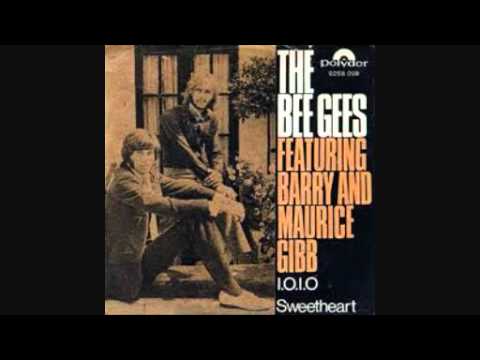
- On record it was a popular hit, usually performed as a romantic ballad, sometimes with a Latin inflection by “Whispering” Jack Smith and, in an idiosyncratic arrangement recorded on 4 January 1928, the Paul Whiteman Orchestra.
- he Paul Whiteman version, Victor 21214-A, featuring Bix Beiderbecke on cornet, was No. 1 for 3 weeks on the Billboard charts in 1928.
- Gene Austin‘s recording was No. 1 for 8 weeks the same year.
- Ruth Etting also recorded a version, which reached No. 10.
- Les Brown and His Band of Renown recorded “Ramona” in 1953.
- In 1958, Jim Reeves recorded “Ramona” for his album Girls I Have Known.
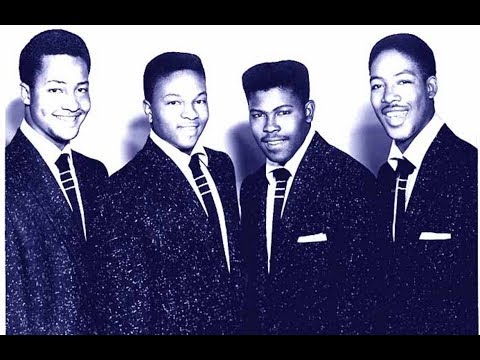
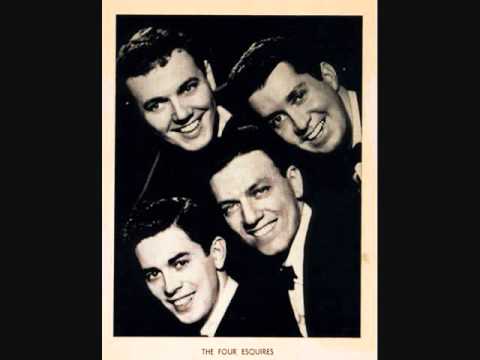
- It was a German by The Blue Diamonds
- and Dutch number one hit in 1960 for the Blue Diamonds, arranged in an upbeat style similar to the Everly Brothers recordings of that period. Spanish version by The Blue Diamonds
- English version by The Blue Diamonds
- In 1964 it was a UK hit for The Bachelors who reached the No. 4 spot in the charts during a 13-week stay.
- Singer Billy Walker revived the song for the country market in 1968, reaching the top 10 of the US country charts, peaking at No. 8.
- Grady Martin released an instrumental version in 1965 on his Instrumentally Yours album.
- This song was covered by the late Singaporean singer/songwriter/lyricist Su Yin (舒雲) in Mandarin Chinese language with Chinese lyrics written by Li Tian (黎天) and given the title name of 蕾夢娜, appearing on his LP album 黃昏放牛*一片青青的草地, and released by EMI Columbia Records in 1967.
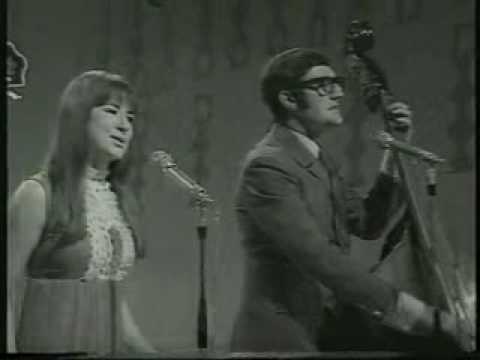
- André Rieu – Ramona
- David Whitfield – Ramona (1961)
- Louis Armstrong – Ramona
- Ramona
- DÚO DINÁMICO “RAMONA”
- James Last
Popular culture
- It has been used on the soundtracks of several other films, most recently by Ken Loach in Land and Freedom (1995)
and in the BAFTA-nominated Harry un ami qui vous veut du bien (2000).
Ramona (1910 Film)
| Ramona | |
|---|---|
| Directed by | D. W. Griffith |
| Written by | D. W. GriffithStanner E. V. Taylor |
| Based on | Ramona 1884 novel by Helen Hunt Jackson |
| Produced by | D. W. Griffith |
| Starring | Mary PickfordHenry B. Walthall |
| Cinematography | G. W. Bitzer |
| Distributed by | Biograph Company |
| Release date | May 23, 1910 |
| Running time | 17 minutes |
| Country | United States |
| Language | Silent (English intertitles) |
Ramona is a 1910 American silent drama film directed by D. W. Griffith, based on Helen Hunt Jackson‘s 1884 novel Ramona. Through a love story, the early short explores racial injustice against Native Americans and stars Mary Pickford and Henry B. Walthall. A print survives in the Library of Congress film archive. The film was remade in 1928 (dir. Edwin Carewe) with Dolores del Río and in 1936 (dir. Henry King) with Loretta Young.
Plot
Ramona follows the romance between Ramona (Mary Pickford), a Spanish orphan raised by the wealthy Moreno family, and Alessandro (Henry B. Walthall), a Native American who arrives at the family’s ranch. Felipe (Francis J. Grandon), Ramona’s foster brother, confesses his love for her, but she rejects him in favor of Alessandro. Their desire to marry is opposed by Ramona’s foster mother, who expels Alessandro from the estate.
Alessandro returns to his village, only to find it destroyed by white settlers. Ramona, upon learning she is of partial Native American descent, chooses to leave her family and live with Alessandro. They marry and settle among the ruins of his village, where they have a child. Their peace is disrupted when settlers claim the land, resulting in the death of their baby and Alessandro’s mental decline. Alessandro is killed by a white man, and Ramona returns to the ranch with Felipe.
Cast

- Mary Pickford as Ramona
- Henry B. Walthall as Alessandro
- Francis J. Grandon as Felipe
- Kate Bruce as The Mother
- W. Chrystie Miller as The Priest
- Dorothy Bernard
- Gertrude Claire as Woman in West
- Robert Harron
- Dell Henderson as Man at Burial
- Mae Marsh
- Frank Opperman as Ranch Hand
- Anthony O’Sullivan as Ranch Hand
- Jack Pickford as A Boy
- Mack Sennett as White Exploiter

Production
Advertisements for the film stated that it was made “by arrangement with Little, Brown, & Company,” the publishers of Jackson’s novel. The film was shot on location in Ventura County, California, “at identical locations wherein Mrs. Jackson placed her characters.”
At the time D. W. Griffith directed Ramona, the Biograph production company was experiencing financial difficulties. Still based in New York and competing with the now-fragmented Edison Company, Biograph was in search of new creative direction. Griffith joined the company in 1908 as a writer and actor. Soon after, the company’s head director, Wallace McCutcheon, became ill, and his son was unable to maintain the role. As a result, Griffith became the principal director, overseeing all Biograph productions between June 1908 and December 1909. During this period, Griffith produced a significant volume of work, averaging one 12-minute and one 16-minute film per week. Biograph began its expansion westward largely due to Griffith’s interest in filming Ramona on location in Ventura, California.
Griffith’s frequent collaborator Billy Bitzer served as cinematographer. Bitzer had originally been hired as an electrician at Biograph, but his interest in photography led him to become a pioneering figure in early cinema. He was known for experimenting with lighting and close-up techniques. Bitzer and Griffith began working together shortly after The Adventures of Dollie, Griffith’s first film, and continued their collaboration until both left Biograph in 1913. Bitzer’s innovations are evident in Ramona through the film’s landscape cinematography and early use of techniques such as cross-cutting.
Watch The Movie
Ramona (1928 Film)
| Ramona | |
|---|---|
| |
| Directed by | Edwin Carewe |
| Written by | Finis Fox |
| Based on | Ramona 1884 novel by Helen Hunt Jackson |
| Starring | Dolores del Río Warner Baxter |
| Cinematography | Robert Kurrle |
| Edited by | Jeanne Spencer |
| Music by | “Ramona” by Mabel Wayne and L. Wolfe Gilbert |
| Production company | Inspiration Pictures |
| Distributed by | United Artists |
| Release dates | May 12, 1928 (New York City, premiere) |
| Running time | 80 minutes |
| Country | United States |
| Languages | Sound (Synchronized) (English intertitles) |
| Box office | $1.5 million |
Ramona is a 1928 American synchronized sound drama film directed by Edwin Carewe,[3] based on Helen Hunt Jackson‘s 1884 novel Ramona, and starring Dolores del Río and Warner Baxter. While the film has no audible dialogue, it was released with a synchronized musical score with sound effects using both the sound-on-disc and sound-on-film process. This was the first United Artists film to be released with a recorded soundtrack. The novel had been previously filmed by D. W. Griffith in 1910 with Mary Pickford, remade in 1916 with Adda Gleason, and again in 1936 with Loretta Young.
Plot
Ramona, who is half Native American, is raised by a Mexican family. Ramona suffers racism and prejudice in her community, and when she finds out that she is half Native, she chooses to identify as a Native American instead of a Mexican American so that she can marry Alessandro, who is a Native as well. This romantic tragedy relays the tragic death of Ramona and Alessandro’s child at the hands of a white doctor, who refuses to help their child because of his skin color. Shortly after, the couple moves away, and Alessandro is killed by a white man for robbing him of his horse; Ramona eventually reunites with her childhood friend Felipe and starts a new life as a depressed woman. She is able to recover from her depression and remember her feelings for Felipe only when he sings a song from their childhood to restore her memory.
Cast
- Dolores del Río as Ramona
- Warner Baxter as Alessandro
- Roland Drew as Felipe
- Vera Lewis as Señora Moreno
- Michael Visaroff as Juan Canito
- John T. Prince as Father Salvierderra
- Mathilde Comont as Marda
- Carlos Amor as Sheepherder
- Jess Cavin as Bandit Leader
- Rita Carewe as Baby
- Jean the Dog as Dog
- Shep Houghton as the Mexican Boy
- Nadine Riga as the Girl
- Saint-Granier as the French singer
- Dorothy Teters as the Indian
Music
The film featured a theme song entitled “Ramona” with music by Mabel Wayne and lyrics by L. Wolfe Gilbert. The song proved to be one of the biggest song hits of the year not only in the United States but worldwide.
Production

Parts of the film were shot in Zion National Park, Springdale, and Cedar Breaks National Monument, all in Utah.
Reception
Mordaunt Hall of The New York Times found much to praise in what he called “an Indian love lyric”: “This current offering is an extraordinarily beautiful production, intelligently directed and, with the exception of a few instances, splendidly acted. The scenic effects are charming. … The different episodes are told discreetly and with a good measure of suspense and sympathy. Some of the characters have been changed to enhance the dramatic worth of the picture, but this is pardonable, especially when one considers this subject as a whole.”
Effects
An article published by UCLA claimed that the 1928 film is believed to be the most authentic of the five film adaptations of Ramona since the director Edwin Carewe was part Chickasaw and Dolores del Río was raised in Mexico. Ramona is differentiated from most films with a typical Hollywood ending because of its authentic cultural values embedded throughout. An article by Indian Country Today revealed the fact that Carewe discovered del Río in Mexico and invited her to Hollywood to perform in his film. Many film enthusiasts see Carewe as del Río’s steppingstone to fame in Hollywood as an actor and singer. Del Río recorded the film’s theme song, “Ramona.” It was not used in the 1936 version.
Helen Hunt Jackson and Edwin Carewe shared a goal of exposing the mistreatment of the Native Americans at the hands of the U.S. Federal Government through the means of Ramona. Both the book and the film, however, were popularized because of their dramatic, romantic, and cultural aspects.
Preservation status
For decades, Ramona was thought to be lost until archivists rediscovered it in the Czech Film Archive in Prague in 2010. The Motion Picture, Broadcasting and Recorded Sound Division of the Library of Congress later transferred Ramona’s highly flammable original nitrate film to acetate safety stock. Library of Congress Moving Image Curator Rob Stone was in charge of the challenge of converting Ramona’s Czech intertitles back into English. The only available copy was given to the Library of Congress to replicate and then send back to the Czech Republic.
Today, prints of the film are held at Library of Congress and the Czech Film Archive and also at Gosfilmofond.
The restored version of the 1928 film had its world premiere in the Billy Wilder Theater with the Mont Alto Motion Picture Orchestra playing live at the University of California, Los Angeles on March 29, 2014. Later, on October 17, 2014, Rodney Sauer and the Mont Alto Motion Picture Orchestra and Film Historian Jeffrey Crouse brought the film “home” to Springdale, Utah, for a special performance to the place where the film was largely shot. Carewe’s older brother Finis Fox had written Ramona’s screenplay and created its intertitles.
Watch The Movie
Ramona (1936 Film)
| Ramona | |
|---|---|
| |
| Directed by | Henry King |
| Written by | Stuart Anthony Paul Hervey Fox Sonya Levien Lillian Wurtzel |
| Screenplay by | Lamar Trotti |
| Based on | Ramona 1884 novel by Helen Hunt Jackson |
| Produced by | John Stone Sol M. Wurtzel |
| Starring | Loretta Young Don Ameche |
| Cinematography | William V. Skall |
| Edited by | Alfred DeGaetano |
| Music by | Alfred Newman |
| Color process | Technicolor |
| Production company | 20th Century Fox |
| Distributed by | 20th Century Fox |
| Release date | September 25, 1936 |
| Running time | 84 minutes |
| Country | United States |
| Language | English |
| Budget | $600,000 |
| Box office | $1 million |
Ramona is a 1936 American Drama Western film directed by Henry King, based on Helen Hunt Jackson‘s 1884 novel Ramona. This was the third adaptation of the film, and the first one with sound. It was the fourth American feature film using the new three strip Technicolor process. It starred Loretta Young and Don Ameche. Filming started on May 11, 1936 and ended on June 29, 1936.
The New York Times praised its use of new Technicolor technology but found the plot “a piece of unadulterated hokum.” It thought “Ramona is a pretty impossible rôle these heartless days” and Don Ameche “a bit too Oxonian” for a chief‘s son.
Cast
- Loretta Young as Ramona
- Don Ameche as Alessandro
- Kent Taylor as Felipe Moreno
- Pauline Frederick as Señora Moreno
- Jane Darwell as Aunt Ri Hyar
- Katherine DeMille as Margarita
- Victor Kilian as Father Gaspara
- John Carradine as Jim Farrar
- J. Carrol Naish as Juan Can
- Pedro de Cordoba as Father Salvierderra
- Charles Waldron as Dr. Weaver
- Claire Du Brey as Marda
- Russell Simpson as Scroggs
- William Benedict as Joseph Hyar
- D’Arcy Corrigan as Jeff (uncredited)
- Ethan Laidlaw as Bill (uncredited)














.jpg)
.jpg)
.jpg)
)
Comments