







 Johnny Carroll
 Floyd Cramer
 Al Hirt
.jpg#/media/File:Red_Headed_Stranger_(film).jpg)


Blue Eyes Crying in the Rain (Song)
From Wikipedia, the free encyclopedia
| “Blue Eyes Crying in the Rain” | |
|---|---|
| |
| Single by Willie Nelson | |
| from the album Red Headed Stranger | |
| B-side | “Bandera” |
| Released | July 1975 |
| Recorded | February 9–12, 1975 |
| Genre | Country |
| Length | 2:18 |
| Label | Columbia |
| Songwriter(s) | Fred Rose |
| Producer(s) | Willie Nelson |
| Willie Nelson singles chronology | |
| “Sister’s Coming Home” (1974)”Blue Eyes Crying in the Rain“ (1975)”Fire and Rain“ (1976) | |
“Blue Eyes Crying in the Rain” is a song written by songwriter Fred Rose. First recorded by Elton Britt in 1946,
then made more popular by Roy Acuff in 1947.
The song has been covered by many artists, including Hank Williams Sr., Johnny Russell, Charley Pride, and Elvis Presley. Most notably, the song was recorded by Willie Nelson as part of his 1975 album Red Headed Stranger. Both the song and album revived Nelson’s success as a singer and recording artist.
Background
Originally recorded in 1947 by Acuff, “Blue Eyes Crying in the Rain” was recorded by Hank Williams in 1951 for the Mother’s Best Flour Hour.
Other early remakes of the song were made by Donn Reynolds (MGM single – June 1957),
Ferlin Husky (album Ferlin’s Favorites – November 1959),
Slim Whitman (album Country Favorites – 1959),
Gene Vincent (recorded October 15, 1958; album Crazy Times! -1960),
Bill Anderson (album …Sings Country Heart Songs – January 15, 1962),
John D. Loudermilk (album Country Love Songs Plain and Simply Sung – August 1968),
Hank Snow (album Greatest Hits)
and Conway Twitty (album Hello Darlin’ – June 1970).
The version by Willie Nelson, recorded for his 1975 concept album Red Headed Stranger, which was about a fugitive preacher on the run from the law after killing his wife, was lauded by country music historian Bill Malone as “a fine example of clean, uncluttered country music, [with] a spare arrangement that could have come straight out of the 1940s.” Rolling Stone noted the song was delivered with his “jazz-style phrasing” and was “the beating heart of Red Headed Stranger.”
| Red Headed Stranger | |
|---|---|
| |
| Studio album by Willie Nelson | |
| Released | May 1975 |
| Recorded | January 1975 |
| Studio | Autumn Sound (Garland, Texas) |
| Genre | Countryoutlaw country |
| Length | 33:30 |
| Label | Columbia |
| Producer | Willie Nelson |
| Willie Nelson chronology | |
| Phases and Stages (1974)Red Headed Stranger (1975)The Sound in Your Mind (1976) | |
| Singles from Red Headed Stranger | |
| “Blue Eyes Crying in the Rain“ Released: 1975″Remember Me” Released: 1976 | |
Track listing
Original release
Side one
| No. | Title | Writer(s) | Length |
|---|---|---|---|
| 1. | “Time of the Preacher” | Willie Nelson | 2:26 |
xxx
| 2. | “I Couldn’t Believe It Was True” | Eddy Arnold, Wally Fowler | 1:32 |
|---|
xxx
| 3. | “Time of the Preacher Theme” | Nelson | 1:13 |
|---|
xxx
| 4. | “Blue Rock Montana” / “Red Headed Stranger” (medley) | Nelson / Carl Stutz, Edith Lindeman | 1:36 |
|---|
xxx
xxx
| 6. | “Red Headed Stranger“ | Carl Stutz, Lindeman | 4:00 |
|---|
xxx
| 7. | “Time of the Preacher Theme” | Nelson | 0:25 |
|---|
xxx
xxx
Side two
| No. | Title | Writer(s) | Length |
|---|---|---|---|
| 1. | “Denver” | Nelson | 0:53 |
xxx
| 2. | “O’er the Waves“ | Juventino Rosas, arranged by Willie Nelson | 0:47 |
|---|
xxx
| 3. | “Down Yonder” (played by Bobbie Nelson) | L. Wolfe Gilbert | 1:56 |
|---|
xxx
xxx
| 5. | “Remember Me (When the Candle Lights Are Gleaming)” | Scotty Wiseman | 2:52 |
|---|
xxx
| 6. | “Hands on the Wheel” | Bill Callery | 4:22 |
|---|
xxx
| 7. | “Bandera” | Nelson | 2:19 |
|---|
xxx
Reissue (2000)
Track 1-15 were from the original release
| No. | Title | Writer(s) | Length |
|---|---|---|---|
| 16. | “Bach Minuet in G“ | Christian Petzold; arranged by Willie Nelson, falsely attributed to Johann Sebastian Bach | 0:37 |
xxx
| 17. | “I Can’t Help It (If I’m Still in Love with You)” | Hank Williams | 3:31 |
|---|
xxx
xxx
| 19. | “Bonaparte’s Retreat“ | Pee Wee King, Redd Stewart | 2:26 |
|---|
xxx
A music video for the song was created in 1986 to promote the motion picture adaptation of the album.
Reception and legacy
Before the success of “Blue Eyes Crying in the Rain,” Nelson had enjoyed widespread success primarily as a songwriter, with such songs as “Crazy” (Patsy Cline)
and “Hello Walls” (Faron Young).
As a performer, meanwhile, Nelson had hit the top 10 of the Billboard magazine Hot Country Singles chart just twice; it had happened in 1962, once as a solo artist (“Touch Me”)
and again as part of a duet with Shirley Collie (“Willingly“).
Thereafter, Nelson had approached the top 20 on occasion, but went 13 years without a top 10 hit.
In October 1975, the song became Nelson’s first No. 1 hit as a singer, and at year’s end, was the third-biggest song of 1975 on the Billboard Hot Country Singles chart. In addition, the song gained airplay on Top 40 radio, reaching No. 21 on the Billboard Hot 100.
In 1975, at the 18th Annual Grammy Awards, “Blue Eyes Crying in the Rain” won Willie a Grammy for Best Country Vocal Performance, Male. It was his first Grammy out of twelve he would go on to win.
In 2004, Rolling Stone ranked “Blue Eyes Crying in the Rain” No. 302 on its list of the 500 Greatest Songs of All Time. Rolling Stone also ranked “Blue Eyes Crying in the Rain” No. 48 on its list of the 100 Greatest Country Songs of All Time in June 2014. The publication later ranked the song at No. 27 on its 200 Greatest Country Songs of All Time list in May 2024.
Chart performance
| Chart (1975) | Peak position |
|---|---|
| US Hot Country Songs (Billboard) | 1 |
| US Billboard Hot 100 | 21 |
| Canadian RPM Country Tracks | 2 |
| Canadian RPM Top Singles | 40 |
| Canadian RPM Adult Contemporary Tracks | 9 |
| Australian Kent Music Report | 57 |
Other Cover Versions
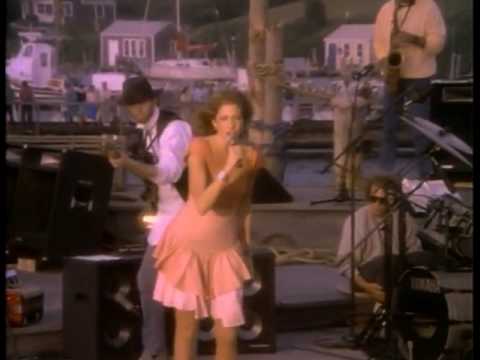
- Elvis Presley recorded “Blue Eyes Crying in the Rain” (having sung it privately with friends and family for years while accompanying himself on piano) in the Jungle Room at Graceland on February 7, 1976. This was the last known song that Elvis Presley sang (at the piano in the rest area of his racquetball court located to the rear of Graceland) before his death on August 16, 1977.
- Maria Tyl’s version reached No. 7 in South Africa in 1981.
- A live version by Willie Nelson and Shania Twain was included on Nelson’s 2003 live album Live & Kickin’: Willie Nelson and Friends.
- Oesch´s die Dritten
- Shania Twain – Music City Tonight
- Patricia Romania
- Vince Gill
- Ray Price
- Linda Good
- UB40
- Petula Clark
- Olivia Newton John
- George Jones
- Lee Ra Hee
- Virginia Lee and Slim Whitman
- Sheryl Crow
- Hank Locklin
- Charley Pride
Red Headed Stranger (Film)
| Red Headed Stranger | |
|---|---|
| |
| Directed by | William D. Wittliff |
| Written by | William D. Wittliff |
| Produced by | Willie Nelson William D. Wittliff |
| Starring | Willie Nelson Morgan Fairchild |
| Cinematography | Neil Roach |
| Edited by | Stephen Purvis Eric A. Williams |
| Music by | Willie Nelson |
| Distributed by | Alive Films |
| Release date | October 31, 1986 (United States) |
| Running time | 105 minutes |
| Country | United States |
| Language | English |
| Budget | $1.8 million |
Red Headed Stranger is a 1986 American Western drama film written and directed by William D. Wittliff. The film stars Willie Nelson and Morgan Fairchild. It is based on Nelson’s album Red Headed Stranger (1975).
Plot
In 1901, Preacher Julian Shay (Nelson) and his new bride Raysha (Fairchild) leave Philadelphia for Driscoll, Montana, to replace a minister who tells Julian, “You’ll be fighting the devil on his own ground here, sir.”
Julian soon learns the town is under the control of Larn Clavers and his sons, who monopolize the water supply. The preacher convinces Sheriff Scoby, the town’s honest but fearful lawman, to stand up to the Clavers. He also gets the townspeople to re-excavate, and then guard, an old water well. A man protecting the well is murdered by Odie Clavers, one of Larn’s sons. Odie is hanged for his crime.
Raysha hates living in Driscoll and contacts an old lover, who comes to Montana and takes her away from the town. Julian tracks down his wife and her lover, and he kills them both. The preacher then wanders about the west until meeting Laurie (Ross), a farm widow with a young son named Nathan. Julian helps Laurie and Nathan work their farm and considers settling down with them, but Sheriff Scoby finds him. In Julian’s absence, the Clavers had attacked Scoby and disabled the well’s windmill pump, then threatened to kill anyone else who stood up to them. Driscoll’s residents were cowed into trying to dismiss Scoby to avoid further violence. Scoby convinces Julian to return to Driscoll and help him fight against the Clavers.
Overnight, Julian and Scoby repair Driscoll’s windmill, restoring the flow of water. The Clavers notice this in the morning and Larn declares he will destroy the windmill this time, but they are immediately ambushed by Julian and Scoby. Although Scoby is wounded in the battle, Julian manages to outfox and outgun the family. The Clavers’ corpses are mounted on boards and displayed outside the sheriff’s office. Julian bids Scoby farewell and returns to Laurie and Nathan.
Cast
- Willie Nelson as Julian Shay
- Morgan Fairchild as Raysha Shay
- Royal Dano as Larn Clavers
- R. G. Armstrong as Sheriff Reese Scoby
- Katharine Ross as Laurie
- Sonny Carl Davis as Odie Claver
Production
Wittliff met Willie Nelson in the late 1970s. Wittliff was a writer on Honeysuckle Rose (1980) and Barbarosa (1982), which both starred Nelson. Nelson played his Red Headed Stranger for Wittliff, and Wittliff agreed to write a script based on the musical storyline. Wittliff finished a draft in 1979 and Universal Studios green-lighted the film with a budget of $14 million. The studio wanted Robert Redford to play the “Red Headed Stranger,” a role Nelson had envisioned for himself. It took two years, but Redford finally turned the part down. Nelson and Wittliff gave back their advances to buy the script back.
HBO took an interest in the script and budgeted $5 million to produce it. Sam Peckinpah was attached to direct the film, but Peckinpah was unhappy with the low budget and left the project. The project died at HBO and Nelson and Wittliff began to raise the $5 million on their own. The budget ended up at $1.8 million, coming from a diverse group of investors, including Bud Shrake and Darrell Royal.
Red Headed Stranger began production on April 29, 1985. The main set, a western town nicknamed “Willieville,” had been built over the previous two years across the road from Nelson’s golf course, thirty miles west of Austin, Texas. Most of the filming was done in “Willieville,” but nine other locations around Central Texas were also used. Production wrapped on June 14, 1985.
Release
Red Headed Stranger debuted at the Denver International Film Festival in October 1985. Critical response was mediocre and called the movie “dull” (Variety) and “an insipid story” (The Denver Post). The film opened in Nelson and Wittliff’s home state of Texas, where it received a warmer welcome. The movie then had a limited national release in larger cities such as Seattle, Washington, and Philadelphia, Pennsylvania.






























.jpg)
.jpg)
)
Comments