







Someday (You’ll Want Me to Want You) (Song)
From Wikipedia, the free encyclopedia
“Someday You’ll Want Me to Want You” is a popular song published in 1944 by Jimmie Hodges. The song became a standard, recorded by many pop and country music singers.
The song features in Series 3 Episode 6 ‘Christening’ of the British comedy The Royle Family.
Lawsuit
In April 1951, Hugh O. Starr, an inventor from Steubenville, Ohio, filed an action in United States District Court, Southern District of New York, against Jimmie Hodges and publisher Duchess Music Corporation. Starr alleged that he wrote the words and music to ‘Someday’ in 1944, after which the defendants “appropriated, copyrighted, published and sold” his work. He was awarded $15,000 in a settlement ($181,700 in 2024).
Charting versions
| “Someday” | |
|---|---|
| Single by Elton Britt | |
| A-side | “Weep No More, My Darlin'” |
| Published | December 29, 1944 by Main Street Songs, Inc., New York |
| Released | January 29, 1945 |
| Recorded | November 22, 1944 |
| Genre | Hillbilly |
| Length | 2:51 |
| Label | Bluebird 33-0521 |
| Songwriter | Jimmie Hodges |
- Elton Britt‘s 1946 version peaked at number 2 on the Most Played Juke Box Folk Records chart.
| “Someday You’ll Want Me to Want You” | |
|---|---|
| Single by Vaughn Monroe and His Orchestra | |
| B-side | “And It Still Goes” |
| Released | August 1949 |
| Genre | Popular music |
| Length | 3:10 |
| Label | RCA Victor 20-3510 |
| Songwriter | Jimmie Hodges |
- The recording by Vaughn Monroe was released by RCA Victor Records as catalog number 20-3510 (78rpm) and 47–2986. It first reached the Billboard Best Seller chart on July 29, 1949, and lasted eighteen weeks on the chart, spending two weeks at number 1.
- The recording by The Mills Brothers was released by Decca Records as catalog number 24694. It first reached the Billboard magazine Best Seller chart on August 12, 1949, and lasted 15 weeks on the chart, peaking at number 8.
- A version by Jodie Sands barely made the Top 100 chart in 1958, reaching number 95, but did better in the United Kingdom, where it spent 10 weeks on the charts, peaking at number 14.
- Ricky Nelson released a version in 1958 which reached number 9 in the UK, and number 3 in Norway.
- Singer Della Reese released a rendition of the song in 1960, and it peaked at number 56 on the Billboard Hot 100 chart, and number 31 on Cash Box magazine’s best-selling chart.
- American country artist Patsy Cline posthumously released a single version of the song, which reached number 23 on the Bubbling Under Hot 100 chart in 1964.
Other recorded versions
- Eddy Arnold, 1954
- Gene Autry, 1946
- Brook Benton, 1960
- Issy Bonn, 1946
- Tanya Rae Brown, 1999
- Ray Charles, 1962
- Sam Cooke, 1958
- Norrie Cox & His New Orleans Stompers
- Clyde McPhatter & The Drifters, 1954
- Maureen Evans, 1958
- Connie Francis, 1962
- Jim Hendricks
- Tom Jones, 1966
- Kitty Kallen, 1961
- Jerry Lee Lewis, 1987
- Warner Mack, 1962
- Dean Martin, 1960
- Sonny & Cher, 1971
- Mina, 1972
- Anne Murray, 2002
- Willie Nelson, 1993
- Daniel O’Donnell, 1994
- Les Paul and Mary Ford, 1962
- George Jones & Gene Pitney, 1965
- Cliff Richard with The Shadows, 1965
- Red Steagall, 1976
- Justin Tubb, 1957
- Gene Vincent & The Shouts, 1964
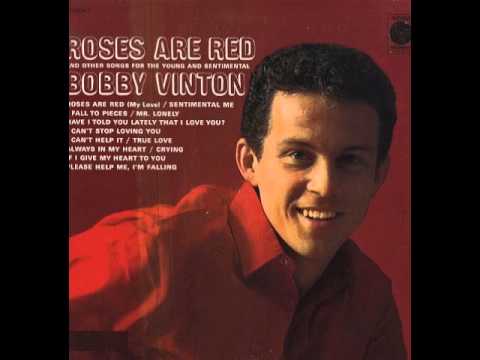
- Bobby Vinton, 1966
- Brenda Lee
- Jim Reeves
- Harry Babbit
- Kay Starr
- Don Gibson
- Virginia Lee
Summary of this song
“Someday (You’ll Want Me to Want You)” is a timeless pop and country standard that has been breaking hearts—and topping charts—since the 1940s. It’s the ultimate “what goes around comes around” anthem.
Here is the breakdown of its history, famous versions, and why it stuck.
🎶 The Origins
The song was written by Jimmie Hodges in 1944. At its core, it’s a song about romantic karma: the narrator is being left behind now, but they predict that one day the tables will turn, and the person leaving will be the one feeling the sting of unrequited love.
🎤 Key Versions
Because the melody is so versatile, it has been a hit across multiple genres, from country to R&B.
| Artist | Year | Why it Matters |
| Elton Britt | 1944 | The original country hit. It became a massive “homecoming” song for soldiers returning from WWII. |
| Vaughan Monroe | 1949 | A polished, big-band pop version that hit #1 on the Billboard charts. |
| The Mills Brothers | 1949 | A smooth, barbershop-style harmony version that reached the top 10. |
| Patsy Cline | 1964 | Recorded for her Sentimental Journey album; her soulful delivery made it a definitive country-pop ballad. |
| Brenda Lee | 1961 | Her version was a major international success, particularly in the UK. |
| Ricky Nelson | 1958 | He gave it a rockabilly/teen idol flair, keeping the song alive for the rock-and-roll generation. |
🌟 Legacy & Pop Culture
The song has a “standard” status, meaning it’s one of those tunes that feels like it has existed forever. Its simple, repetitive structure makes it incredibly catchy, and its theme is universal—everyone has wanted a little bit of “revenge” after a breakup.
Fun Fact: The song saw a resurgence in the 1960s because it fit perfectly into the “Nashville Sound,” which blended traditional country lyrics with sophisticated orchestral arrangements.
























'))
Comments