





Angel Baby (Rosie and the Originals Song)
From Wikipedia, the free encyclopedia
| “Angel Baby” | |
|---|---|
| |
| Single by Rosie and the Originals | |
| B-side | “Give Me Love” |
| Released | 1960 |
| Recorded | 1960 |
| Genre | Rock and roll doo-wop |
| Length | 3:43 |
| Label | Highland Records |
| Songwriter | Rosie Hamlin (some prints credit David Ponci as the songwriter) |
 Excerpt from Angel BabyDuration: 30 seconds.0:30Performed by Rosie & The OriginalsProblems playing this file? See media help. Excerpt from Angel BabyDuration: 30 seconds.0:30Performed by Rosie & The OriginalsProblems playing this file? See media help. | |
“Angel Baby” is a 1960 single by Rosie and the Originals. The group recorded the song independently on a two-track machine, located in a facility in the small farming community of San Marcos, California. At the time, lead singer Rosie Hamlin was only 15 years old. She had written the lyrics for “Angel Baby” as a poem for “[her] very first boyfriend” when she was a 14-year-old student at Mission Bay High School in San Diego, California.
Initially unable to find a label willing to distribute the song because of its unpolished sound, the group convinced a San Diego department store to pipe their master through the listening booths in the record department. The response from listeners prompted Highland Records to sign the band and promote the single. Since its release the song has become an oldies standard.
Rosie & the Originals
The song debuted on the Billboard Hot 100 in December 1960 and remained on the charts for 13 weeks, reaching No. 5 on January 28, 1961. On the R&B charts, “Angel Baby” also peaked at #5 and remained on that chart for eight weeks. In 1961, “Angel Baby” was also released in Canada (#3) on the Zirkon label and in Australia and England on London Records. The British release slightly edited the intro.
Rosie & the Originals later re-recorded a Spanglish version of “Angel Baby”, which appears on the UK compilations The Best of Rosie & the Originals (1999) and Angel Baby Revisited (2002). In 2018, this recording appeared in an El Pollo Loco commercial.
John Lennon
John Lennon recorded a version of the song in 1973, eventually released on the 1986 album Menlove Ave. and later, on the 1990 box set Lennon. A remixed version was released in 2004 as a bonus track on a reissue of Lennon’s 1975 Rock ‘n’ Roll album. In the intro, Lennon calls it one of his favorite songs and says, “send my love to Rosie, wherever she may be.” Rosie called it her favorite cover of the song. Circulating tapes of Lennon’s 1971 birthday party also include a busked version of the song.
Other versions
- Several versions of the song were released in 1961, including one by Kathy Young, who included it on her album The Sound Of Kathy Young.
- Soul singer Charles Brown released the song on a King Records single in 1961
- Girl group Reparata and the Delrons included the song on their 1970 album, Rock ‘n’ Roll Revolution.
- Avant garde art pop icon Jun Togawa recorded a punk version in 1985, on her best selling Japanese album Suki Suki Daisuki.
- A reggae version was released by Shehene & the Knobs on a single in 1987.
- In 1991, singer Angelica released an album with the song as the title track. Released as a single, Angelica scored a No. 29 hit on the Billboard Hot 100.
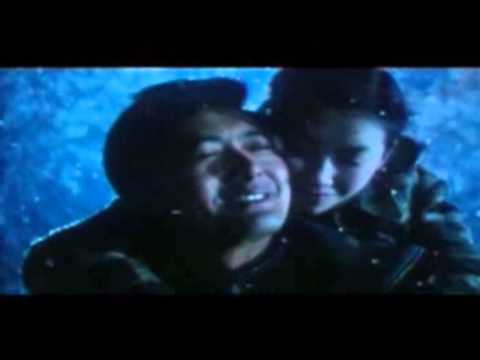
- The song was covered by actor Wong Chi-zan in a scene for the 1991 Taiwanese film A Brighter Summer Day.
- Jeanette Jurado also did a cover that was featured in the 1995 feature film My Family.
- Linda Ronstadt recorded a version for her 1996 album of lullabies, Dedicated to the One I Love.
- In 2001 singer Jenni Rivera released a version of the song on her album, Se Las Voy A Dar A Otro.
- In 2001, Texas rocker Roky Erickson and his band The Aliens, recorded a version of the song on the album Don’t Knock The Rock
- Yolanda Perez released a version in a mix of English and Spanish on her 2002 album La Potranquita con Banda
- Pop singer Tiffany included the song on her 2005 album Dreams Never Die
- Black Rebel Motorcycle Club did a cover of this song as an iTunes bonus track on for their 2013 album Specter At The Feast.
- System of a Down covered the song live as part of their sole U.S. tour date of 2013 at the Hollywood Bowl in Los Angeles on July 29, 2013.
- Miguel Matute Project recorded a version in 2019 with Liana Ochoa on vocals, included in the album Desde Adentro y Otros Asuntos.
- Monica Rocha
The classic song “Angel Baby” by Rosie & The Originals (specifically a cover by Jeanette Jurado) was featured in the 1995 film My Family (Mi Familia), while the 1995 Australian film also titled Angel Baby, starring John Lynch and Jacqueline McKenzie, featured original music but not that specific song. The original 1960s song appears in several other films and TV shows, including After Hours, How I Met Your Mother, and Mayans M.C..
My Family (1995 Film)
| Mi Familia (My Family) | |
|---|---|
| |
| Directed by | Gregory Nava |
| Screenplay by | Gregory Nava Anna Thomas |
| Produced by | Anna Thomas |
| Starring | Jimmy Smits Esai Morales Eduardo Lopez Rojas Jenny Gago Elpidia Carrillo Constance Marie Edward James Olmos |
| Narrated by | Edward James Olmos |
| Cinematography | Edward Lachman Jason Poteet |
| Edited by | Nancy Richardson |
| Music by | Film score: Mark McKenzie Folk Music: Pepe Ávila |
| Production companies | American Playhouse American Zoetrope Majestic Films International Newcomb Productions |
| Distributed by | New Line Cinema |
| Release date | May 3, 1995 (United States) |
| Running time | 126 minutes |
| Country | United States |
| Languages | English Spanish |
| Box office | $11.5 million |
Mi Familia is a 1995 American drama film directed by Gregory Nava, written by Nava and Anna Thomas, and starring Jimmy Smits, Edward James Olmos, and Esai Morales. The film depicts three generations of a Mexican-American family who emigrated from Mexico and settled in East Los Angeles.
In 2024, the film was selected for preservation in the United States National Film Registry by the Library of Congress as being “culturally, historically, or aesthetically significant”.
Plot
The story is narrated by the family’s oldest son Paco. The film begins with José Sanchez, the father of the family, making a journey that lasts one year on foot from Mexico to Los Angeles. He travels to Los Angeles to meet a distant relative known as El Californio, who was born in the city when it was still part of Mexico. They become fast friends and grow a corn farm together. However, after several years, El Californio nears death. Shortly before dying, El Californio says he wants the following written on his tombstone: “When I was born here, this was Mexico, and where my body lies, this is still Mexico.”
José meets and marries the love of his life, María, an American citizen. After María is illegally deported to Mexico by the U.S. federal government in a mass roundup, she makes it back to Los Angeles via a long and arduous trip two years later, where she returns home with their new son Chucho.
Twenty years later in 1958 or 1959, eldest daughter Irene is getting married. Chucho and Paco have grown up. New additions to the family include Toni, Guillermo “Memo”, and brother Jimmy.
The film begins to gain momentum after the wedding, when a series of events seal Chucho’s fate. One night at a dance hall, Chucho is dancing with his girlfriend, when his rival Butch Mejia starts to bother him. This results in a bloody knife fight between the two, and Chucho accidentally kills him. After this event, Chucho becomes a fugitive of the police. One night when Jimmy is playing ball with his friends, Chucho is shot dead by the Los Angeles Police Department in front of Jimmy. Other members of the family learn of Chucho’s death when they hear gunshots and rush to a nearby street. As an ambulance arrives to take Chucho’s lifeless body away, Paco narrates how Chucho’s whole life had been on borrowed time.
The third generation, which takes place another twenty years later in the 1970s and 1980s, faces situations such as acculturation, assimilation, and past problems of the family.
Jimmy completes a stint in prison and returns home. It is revealed that after Chucho’s death 20 years back, Jimmy became an angry man following in his footsteps, becoming a fugitive like him. One day, Toni visits the Sanchez home and stuns her parents with the news that she is no longer a nun and has married a priest named David Ronconi. Toni and David become involved in helping political refugees. When they find out that a Salvadoran refugee, Isabel, has become a target for murder and is being held for deportation back to El Salvador, Toni convinces Jimmy to marry her so that she is able to stay in the U.S.
Jimmy is resistant to the idea of being a married man; however, Isabel slowly makes herself at home and Jimmy has no choice but to let her stay with him. As Jimmy works on his car listening to “I’m Your Puppet“, Isabel comes up to him and changes the music in the cassette-player. She tries to get him to dance with her on the street. At first he doesn’t want to, but she finally succeeds in teaching him some steps. He asks her at the end of the song, “Will you teach me how to salsa?” It is here that Jimmy finally lets Isabel into his heart and where they both understand that although other people don’t understand them, they know now who they really are together and they finally consummate their marriage.
Isabel becomes pregnant shortly thereafter but unfortunately dies after giving birth to their son, Carlitos. Enraged, Jimmy attacks the doctor whom he blames for her death, burglarizes a store, and is arrested, leaving his son to be raised by his parents. When Jimmy gets out of prison 4 years later, he initially doesn’t want anything to do with his son, who is a spirited, but trouble-making child. When Jimmy finally sees his son, he is filled with joy and immediately wants to care for him. However, his son hates him, who thinks his real father is a cowboy who lives in Texas.
Jose and Maria’s middle son, Guillermo (called “Memo”) purposely downplays his Mexican heritage as an adult by attending college, becoming a lawyer and referring to himself as William, or Bill. He becomes engaged to a young white woman named Karen from an affluent family in Bel-Air. The first meeting between the two families begins well but descends into chaos with Memo chastising Jimmy for his son’s wild behavior.
After Jimmy decides to change his life around for good, Carlitos accepts him and moves with him to Texas where Jimmy has secured a good-paying manufacturing job in San Antonio.
The film concludes with Jose and Maria reminiscing about their past as Jose says “God has been good to us, we’ve been very lucky, and our life it has been very…very good”, and the camera pans to a shot of Los Angeles.
Cast
- Jimmy Smits as Santiago “Jimmy” Sánchez
- Edward James Olmos as Francisco “Paco” Sánchez
- Benito Martinez as Young Paco Sánchez
- Esai Morales as Jesus “Chucho” Sánchez
- Elpidia Carrillo as Isabel Magaña Sánchez
- Enrique Castillo as Guillermo “Memo” Sánchez
- Greg Albert as Young Memo Sánchez
- Rafael Cortés as Roberto Sánchez
- Michael DeLorenzo as Butch Mejia
- Constance Marie as Antonia “Toni” Sánchez
- Scott Bakula as David Ronconi
- Lupe Ontiveros as Irene Sánchez
- León Singer as El Californio
- Mary Steenburgen as Gloria
- Dedee Pfeiffer as Karen Gillespie
- Bibi Besch as Mrs. Gillespie
- Bruce Gray as Mr. Gillespie
- Eduardo Lopez Rojas as Jose Sánchez
- Jacob Vargas as Young Jose Sánchez
- Jenny Gago as Maria Sánchez
- Jennifer Lopez as Young Maria Sánchez
Production
While the film was distributed by New Line Cinema, many production companies were involved in the making of the film, including American Playhouse, Francis Ford Coppola’s American Zoetrope, Majestic Films International, and Newcomb Productions. Gregory Nava has stated that the film has autobiographic overtones, but the film was more inspirational rather than specific. Nava says “A lot of the specifics came from other families when I was doing research for the film in East Los Angeles.” The final scene is duplicated shot-for-shot from the final scene of Satyajit Ray‘s 1959 film The World of Apu.
Filming
Filming began in 1994. The film was shot in both California and Mexico. In California, locations included Agoura Hills, Highland Park, and East Los Angeles. Mexican locations included Ocumicho, Patamba, and Pátzcuaro, which are all in the state of Michoacán.
Reception
Critical response
Reviews were generally positive. The film holds a 79% “Fresh” score on review aggregator Rotten Tomatoes, with an average rating of 7.3/10, based on 58 reviews from professional critics. The website’s critics consensus reads, “My Family‘s emotional impact is dulled by sentiment, but this well-acted drama strikes a universal chord with its multi-generational look at Mexican-American life.”
Roger Ebert, film critic for the Chicago Sun-Times, liked the direction of the film, and wrote “Their story is told in images of startling beauty and great overflowing energy; it is rare to hear so much laughter from an audience that is also sometimes moved to tears. Few movies like this get made because few filmmakers have the ambition to open their arms wide and embrace so much life.”
Film critics Frederic and Mary Ann Brussat, who write for the web based Spirituality and Practice, liked the film, the acting and the direction of the film. They wrote “My Family is a touching and often mystical portrait of a multi-generational Mexican-American family in East Los Angeles…Director Gregory Nava (El Norte) does a fine job orchestrating the many events in this emotionally resonant drama.”
But not all were so kind. Caryn James, in a film review in The New York Times, wrote the film was “wildly uneven” and “offers a trite, overblown narration by Edward James Olmos and an often flagging sense of drama.” She was also not happy with Nava’s direction and wrote “[Nava] seems so enamored of the texture of Mexican-American life that he glides past any sense of character.” James however was very complimentary of Jimmy Smits’ performance.
Awards and honors
- Added to the National Film Registry in 2024.


Jimmy Smits and Jennifer Lopez (who was un-credited for her role), at the 1996 Independent Spirit Awards, having been nominated for their performances.
Wins
- NCLR Bravo Award: NCLR Bravo Award; Outstanding Feature Film, 1995
- Donostia-San Sebastián International Film Festival: OCIC Award, Gregory Nava, 1995
- Young Artist Awards: Best Young Supporting Actor – Feature Film, Jonathan Hernandez, 1996
Nominated
- Casting Society of America Awards: Best Casting for Feature Film, Best Casting for Drama Feature Film, Jane Jenkins, Janet Hirshenson, and Roger Mussenden, 1995
- Donostia-San Sebastián International Film Festival: Golden Seashell, Gregory Nava; 1995
- Academy Awards: Best Make-Up, Ken Diaz and Mark Sanchez, 1996
- Independent Spirit Awards: Best Male Lead, Jimmy Smits; Best Supporting Female, Jennifer Lopez, 1996
Distribution
My Family opened in the United States in wide release on May 3, 1995. In the United Kingdom, it opened on October 6, 1995. The film was screened at a few film festivals including the Donostia-San Sebastián International Film Festival, Spain. Sales at the box-office were average. The first week’s gross was $2,164,840, and the total receipts for the run were $11,079,373. It grossed just $0.4 million internationally for a worldwide total of $11.5 million. The budget of the film is estimated at $5,500,000.
A video was released April 8, 1997 and a DVD version was released on June 9, 2004 by New Line Home Entertainment. A Spanish version video was released.
Watch The Movie
Soundtrack
For the original motion picture soundtrack, the producers include a cross section of Latino music, including a merengue and a mambo. The song “Angel Baby” by Rosie and the Originals is included as well, sung by Exposé vocalist Jeanette Jurado. In the movie, Jurado made a cameo as Rosie Hamlin performing the song.
A CD was released on April 25, 1995 on the Nonesuch Records label. The CD contains 14 tracks, including the main title theme written by Mark McKenzie and Pepe Avila. Gregory Nava wrote the liner notes for the CD. Composer Mark McKenzie also released Con Passione (2001), a CD that contains various compositions he has written for films including seven tracks for My Family.
Track listing
| # | Title |
|---|---|
| 1. | “Main Title Theme from My Family (Mark McKenzie & Pepe Avila) |
xxx
| 2. | “Rosa De Castilla” (Los Folkloristas) |
xxx
| 3. | “Angel Baby” (Jeanette Jurado) |
xxx
| 4. | “Que Rico El Mambo” (Perez Prado) |
xxx
| 5. | “One Summer Night” (All-4-One) |
xxx
| 6. | “Celoso” (Maná) “Jealous Heart” w.m. by J. Carson |
xxx
| 7. | “Down On The Riverbed” (Los Lobos) |
xxx
| 8. | “Tu’, Solo Tu'” (Pedro Infante) |
xxx
xxx
| 10. | “Guavaberry” (Juan Luis Guerra) |
xxx
| 11. | “Bachata Rosa” (Juan Luis Guerra) |
xxx
| 12. | “Konex, Konex” (Los Folkloristas) |
xxx
| 13. | “Senorita” (Juan Luis Guerra) |
xxx
| 14. | “Zappa Mambo” (Banda Machos) |
xxx
| 15. | “Flor De Canela” (Gerado Tamez and Mark McKenzie) |
xxx













)
Comments