





Skyfall (Song)
From Wikipedia, the free encyclopedia
| “Skyfall” | |
|---|---|
| Single by Adele | |
| Released | 5 October 2012 |
| Recorded | 2012 |
| Studio | Abbey Road, London |
| Genre | Orchestral pop pop-soul |
| Length | 4:46 |
| Label | XLColumbia Melted Stone |
| Songwriter(s) | Adele Adkins Paul Epworth |
| Producer(s) | Paul Epworth |
| Adele singles chronology | |
| “Turning Tables“ (2011)”Skyfall“ (2012)”Hello“ (2015) | |
| James Bond theme singles chronology | |
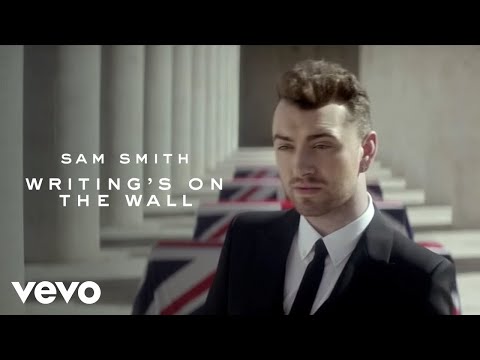
| “Another Way to Die“ (2008)”Skyfall“ (2012)”Writing’s on the Wall“ (2015) | |
“Skyfall” is a song recorded by British singer Adele for the James Bond film of the same name. It was written by Adele and producer Paul Epworth and features orchestration by J. A. C. Redford. Eon Productions invited the singer to work on the theme song in early 2011, a task that Adele accepted after reading the film’s script. While composing the song, Adele and Epworth aimed to capture the mood and style of the other Bond themes, including dark and moody lyrics descriptive of the film’s plot. “Skyfall” was released at 0:07 BST on 5 October 2012 as part of the Global James Bond Day, celebrating the 50th anniversary of the release of Dr. No, the first James Bond film.
“Skyfall” was praised for its lyrics, production and Adele’s vocal performance, with numerous music critics and publications ranking it among the best Bond themes. The song was a global success, topping the charts in eleven countries and reaching the top five in various other regions. It peaked at number two on the UK Singles Chart and number eight on the Billboard Hot 100. With sales of 7.2 million copies worldwide, “Skyfall” is one of the best-selling digital singles of all time.
“Skyfall” received various accolades, including the Academy Award for Best Original Song, Brit Award for British Single, Critics’ Choice Movie Award for Best Song, Golden Globe Award for Best Original Song, and the Grammy Award for Best Song Written for Visual Media, thus making it the first Bond theme to win all the aforementioned awards. During the 85th Academy Awards, Adele performed the song live for the first time.
Background and production
In early 2011, Sony Pictures President of Music Lia Vollack suggested to the James Bond film producers at Eon Productions that they ask Adele to record a theme song for their next Bond film, later revealed to be titled Skyfall. Vollack thought that Adele would be a good choice to ask to record a Bond theme song because her music had a “soulful, haunting, evocative quality”, which Vollack considered would bring back the “classic Shirley Bassey feel” associated with several early Bond films.
Adele, who had just released her second album, 21, admitted that initially she was a “little hesitant” about agreeing to write a Bond theme song. On meeting with the Skyfall film crew, the singer had told Skyfall director Sam Mendes that she felt as though she was not the person they were looking for because “my songs are personal, I write from the heart”. Mendes simply replied “just write a personal song”, telling her to use Carly Simon‘s “Nobody Does It Better” from The Spy Who Loved Me as an inspiration. Adele left the meeting with the script of Skyfall and upon reading it, decided that it was a “no-brainer“, as she “fell in love” with the film’s plot. Producer Paul Epworth, who had worked with Adele on 21, was brought in to help her write the song. Adele stated that she enjoyed working to a brief and set of guidelines, even though it was something she had never done before.

Production of “Skyfall”, from the first contact with Adele to the song’s release, took 18 months to complete. Vollack stated that the reason for this was “fine-tuning” the song, as Adele and Epworth wanted to ensure that they “were getting it right”. The first cut of the song was completed in October 2011. During an interview at their post-Academy Award for Best Original Song win at the 85th Academy Awards in February 2013, Adele revealed that the first draft of the song was written in 10 minutes. After Adele underwent throat microsurgery for vocal problems, she recorded a demo of the track and sent it to Mendes, who was doing the principal photography of Skyfall. The director in turn played the demo for film producer Barbara Broccoli and James Bond actor Daniel Craig, both of whom “shed a tear”. Adele stated that the final cut of the song lasted two studio sessions at Abbey Road Studios in London. It features a 77-piece orchestra conducted by J. A. C. Redford.
Composition and lyrics
“Skyfall” is an orchestral pop and pop-soul song with a duration of four minutes and 46 seconds. Epworth stated that although “Skyfall” is an original composition, he and Adele had worked to capture “the James Bond feeling” of previous theme songs. The song intentionally references Monty Norman‘s “James Bond Theme” after the first chorus.[3] Norman said that the song had his seal of approval and that including the leitmotif he wrote for the Bond character was “a pretty sensible thing to do, if you want to feel the ‘James Bond quality’ of the music”. Epworth said that while “Skyfall” was his first experience writing film music, he had been involved with the production of James Bond music before: while Epworth was a tape operator at AIR Studios, he recorded some film soundtracks including David Arnold‘s Tomorrow Never Dies.
Epworth stated that the producers’ request was for “a dramatic ballad”, so he and Adele tried to “do something that was simultaneously dark and final, like a funeral, and to try and turn it into something that was not final. A sense of death and rebirth”. Epworth watched the first thirteen Bond films seeking the “musical code” of the songs, “whatever the modal structure or the chord that always seemed to unify those songs” and contributed to the mood and “that kind of ’60s jazzy quality”. Epworth identified as a uniting factor “a minor ninth as the harmonic code … the Bond songs, they have that elaboration to it” and wrote what would become the instrumental part of “Skyfall”. He described it as “a bit of a ‘Eureka!’ moment“.
The chordal structure of the chorus of “Skyfall” was originally composed by American artist Matthew Shelly, as part of a prog-rock composition entitled “Failing Grace”, a track from the album Pain, released in 1991. “Skyfall” was composed in the key of C minor using common time at 75 beats per minute (Adagietto). Adele’s vocal range spans over one octave, from the low note of G3 to the high note of C5, on the song. Heavily pregnant at the time of recording, Adele has commented that this was the reason for the song’s low range, and has often struggled to perform the song live due to the lower register. The lyrics closely follow the plot of the film rather than focusing on romanticism. According to Epworth, the song is about “death and rebirth”, saying “It’s like, when the world ends and everything comes down around your ears, if you’ve got each other’s back, you can conquer anything. From death to triumph, that was definitely something we set out to try and capture”. The Daily Telegraph writer Neil McCormick described the lyrics as “slightly sinister” and containing references to a number of Bond tropes and motifs.
Release and remixes

The theme song, and the identity of its singer, was kept secret, but rumours of Adele’s involvement still emerged. Adele first mentioned recording a “special project” in September 2011 in an interview on The Jonathan Ross Show, leading to speculation in the media that she was recording a Bond theme. In an interview with NRJ in April 2012, the singer stated that she intended to release a new single by the end of the year; however, it would not be preceding a new album. The song’s title was originally rumoured to be “Let the Sky Fall”. In September 2012, OneRepublic vocalist Ryan Tedder posted a message on Twitter claiming he had heard the title track and that it was “the best James Bond theme in his lifetime”. Adele’s publicist, Paul Moss, mentioned the song on his Twitter feed; both later deleted their messages. The artwork for the song was leaked online, but Adele’s involvement in the project was not officially confirmed until 1 October. “Skyfall” was released at 0:07 BST on 5 October 2012 as part of the “Global James Bond Day”, celebrating the 50th anniversary of the release of Dr. No, the first James Bond film. A 12-inch single featuring unofficial remixes of the song was sold in Germany to promote the song.
The song was not included on the soundtrack album, marking the second time in the Bond series that the theme song was split from the soundtrack album, following Chris Cornell‘s “You Know My Name” from Casino Royale in 2006. Wilson and Broccoli still asked composer Thomas Newman to include a reference to “Skyfall” in the film’s score “so that it didn’t appear as a kind of ‘one off’ at the top of the movie”. Newman opted to include an interpolation in the track “Komodo Dragon”, used in a scene where Bond enters a casino in Macau. According to Newman, the scene had “a real moment of ‘Bond’ swagger”, and the music fit the scene accordingly. Epworth was visited by Newman for advice, and Redford, who was already doing the score’s orchestration, was requested to arrange “Komodo Dragon”; Newman was unable to do the arrangement because he felt that his task “was already so huge and daunting”.
Critical reception
“Skyfall” received widespread critical acclaim. Entertainment Weekly wrote that there is “finally” a great James Bond theme. The Huffington Post described the song as a “brassy and soulful tune [that] fits perfectly alongside the work of Shirley Bassey in the oeuvre of James Bond title tracks”. RedEye gave the song four out of four stars and declared that it “is a return to form, and if it doesn’t get you hyped for the movie, you’re not a Bond fan”. The Daily Record named “Skyfall” its “Single of the Week” and gave the song five stars out of five. PopCrush gave the song four-and-a-half stars out of five and called it “wholly satisfying and worth the wait”. Idolator wrote that “during the song’s final third, Adele does, in fact, make the sky fall, in typical Adele fashion”. Consequence of Sound commented that “rousing instrumentation elevates the vocals to soaring heights”, while HitFix called the song a “majestic ballad” and a “classic James Bond theme”. Newsday was also very positive, writing that “Skyfall” is “unlike anything else she’s done in her young career. It’s self-assured and grand, drawing inspiration from Dame Shirley Bassey, while adding her own powerful phrasing to make it her own. Adele’s style so far has been to downplay her massive voice with lyrics that are questioning and self-deprecating. On ‘Skyfall,’ though, it sounds like the diva point of view suits her, too”.
The Los Angeles Times complimented the song and said that the song “tells good things for this winter’s blockbuster-to-be. It’s not a reimagining or a musical departure, but simply a righting of the ship. The song is big, bold and seems to have a little spot-o-fun”. MTV was also positive, stating that “Adele’s lush song fits right in with classics by Shirley Bassey, Paul McCartney and Carly Simon”. The Wall Street Journal felt similarly, writing that the song “has sweep and drama, [with] orchestral support [that] gives it a classical timelessness that sets it apart from typical pop songs. Because it is a theme for a Bond film, after all, the song is also shot through with the threat of violence and death”. E! Online wrote that Adele’s song was “a cross, and a good one at that, between the 1971 Bassey classic and a more-focused version of Garbage‘s ‘The World Is Not Enough‘.” The Hollywood Reporter wrote that the song “instantly feels like a Bond theme, with the singer’s sultry voice set against a minor chord progression. Done in big, orchestral style, the mood – like the singer – is all 1960s throwback, back when Bond themes like ‘Goldfinger‘ were smooth, seductive and larger than life”.
Jim Farber of the New York-based Daily News wrote in his review: “It suffers from a similarly meandering melody and ponderous progression. The grandeur of its arrangement easily upstages the tune”, but “even so, the luster of Adele’s tone, and the bravura arc of her vocal, makes it enjoyable enough. And, fifty years down the line, isn’t that all we really expect from a Bond product these days?” Yahoo!‘s Rob O’Connor gave the standalone song a positive review but felt that it was too soon to tell how the song would fit into the wider canon of Bond theme songs. Neil McCormick of the Daily Telegraph was less complimentary, describing the song as “classy” but at the same time, “overly predictable”.
Chart performance
“Skyfall” went to number one at the UK’s iTunes online store less than ten hours after it was released, surpassing “Diamonds” by Rihanna. At 6 am on 5 October, Clear Channel began airing “Skyfall” on 180 radio stations around the United States every hour, on the hour; within 24 hours, “Skyfall” had garnered 10 million audience impressions and had already begun to rank within the top 50 of the Nielsen Broadcast Data Systems-based Radio Songs chart. On 7 October, “Skyfall” entered the UK Singles Chart at number 4 after less than 48 hours on sale. The single sold 84,000 copies in the UK during its first two days of release. On 14 October, “Skyfall” rose to number 2 on the UK Singles Chart with sales of 92,000 copies. This tied “Skyfall” with Duran Duran‘s “A View to a Kill” as the highest-charting James Bond theme song on the UK Singles Chart. This has since been broken when, in 2015, Sam Smith‘s “Writing’s on the Wall” from Spectre debuted at number 1 on the UK Singles Chart. The song was the 20th best-selling song of 2012 in the UK with 547,000 sold. “Skyfall” debuted at number one on the Irish Singles Chart. It also charted at number one on the French Singles Chart for six weeks and spent 24 weeks in the top 10.
The song entered the Billboard Hot 100 at number 8 for the week ending 20 October 2012, becoming Adele’s first song to debut in the top 10 with 261,000 copies sold in the United States during its first three days. Although “Skyfall” debuted at number 8, it was actually the third best-selling single in the US that week – the Hot 100 ranks songs based on sales, radio airplay, and online streaming. “Skyfall” is the first James Bond theme to chart within the top 10 in the US since Madonna‘s “Die Another Day” from the film of the same name a decade earlier and is the first James Bond theme to debut in the top 10. Interest in “Skyfall” led to a 10% increase in sales of Adele’s last album, 21, in the US. For the week ending 27 October 2012, the second week after its release, the song fell from number 8 to number 13.
After Skyfall was released in cinemas in North America, Adele’s song saw a sales increase of 66%. In January 2013, unofficial remixes also warranted the song an inclusion on the Billboard Hot Dance Club Songs chart, peaking at the 10th spot. After Adele won the Oscar for the song, sales in the US increased by 56% with 56,000 downloads. The following week, “Skyfall” sold an additional 103,000 downloads and climbed 28 spots on the Billboard Hot 100. As of July 2013, “Skyfall” has sold over five million copies worldwide. As of January 2013, it had sold 1,600,000 copies in the US according to Soundscan and is the first Bond song to sell a million digital copies.
Accolades

The song won the Academy Award for Best Original Song, which had been the first Bond theme to receive an Academy Award nomination since the 1981 song “For Your Eyes Only” from the film of the same name and was the first Bond theme to win the award. It also won the Critics’ Choice Award for Best Song, the Golden Globe Award for Best Original Song, and the Brit Award for British Single. Adele gave her acceptance speech at the last of those awards through a video message, as she was in Los Angeles preparing for her Academy Award performance. It was also nominated at the Satellite Award for Best Original Song but lost to “Suddenly” from Les Misérables. “Skyfall” was also named the Best Original Song by the film critics associations of Georgia, Houston, Las Vegas, and Phoenix. The song also won the Grammy Award for Best Song Written for Visual Media.
| Year | Organisation | Award | Result |
|---|---|---|---|
| 2012 | Satellite Awards | Best Original Song | Nominated |
| 2013 | Academy Awards | Best Original Song | Won |
| BMI Film & TV Awards | Academy Award Winner | Won | |
| BMI London Awards | Academy Award | Won | |
| Pop Song Award | Won | ||
| Brit Awards | British Single | Won | |
| Critics’ Choice Movie Awards | Best Song | Won | |
| Golden Globe Awards | Best Original Song | Won | |
| Houston Film Critics Society | Best Original Song | Won | |
| World Soundtrack Awards | Best Original Song Written Directly for a Film | Won | |
| 2014 | Grammy Awards | Best Song Written for Visual Media | Won |
Live performance and cover versions
- Adele performed the song live for the first time at the 85th Academy Awards ceremony on 24 February 2013, prior to learning that she had won the award.
- In 2012, the Dutch symphonic metal band Within Temptation covered the song during the recording sessions for their covers album, The Q-Music Sessions.
- In 2013, New Hampshire-based band Our Last Night included a cover version of “Skyfall” on the deluxe edition of their third album entitled Age of Ignorance.
- In 2017, international symphonic metal supergroup Exit Eden released a version of “Skyfall” as the 8th track of their debut album entitled Rhapsodies in Black.
- In 2025, Italian singers Giorgia and Annalisa won the fourth night of the 75th Sanremo Music Festival performing a cover of “Skyfall”.
- In 2025, British singer Raye sang the opening verse and chorus of the song during the James Bond tribute at the 97th Academy Awards.
Formats and track listings
- Digital download
- “Skyfall” – 4:49
- “Skyfall” (Peter Rauhofer Big Room Remix) – 10:00
- UK CD/7″ vinyl single
- “Skyfall” – 4:49
- “Skyfall” (Instrumental) – 4:46
Credits and personnel
Adapted from Discogs.
| Lead vocals and additional background vocals – AdeleSongwriting – Adele Adkins, Paul EpworthProduction – Paul EpworthProduction assistants – Pete Hutchings, Joe Hartwell JonesMixing – Tom ElmhirstEngineer – Matt WigginsMaster engineer – Tom CoyneChoir arrangement – Paul EpworthChoir master – Jenny O’GradyOrchestra contractor – Isobel GriffithsAssistant orchestra contractor – Charlotte Matthews | Orchestral arrangement – Paul Epworth, J. A. C. RedfordOrchestrator and conductor – J. A. C. RedfordOrchestra leader – Thomas BowesOrchestra recording – Simon RhodesPercussion – Paul EpworthGuitar – James ReidDrums – Leo TaylorPiano – Nikolaj Torp LarsenBass – Tom HerbertChoir – Metro Voices |
Credits adapted from the liner notes of “Skyfall”, XL Recordings.
Charts
Certifications and sales
| Region | Certification | Certified units/sales |
|---|---|---|
| Australia (ARIA) | Platinum | 70,000‡ |
| Belgium (BRMA) | Platinum | 30,000* |
| Brazil (Pro-Música Brasil) | Diamond | 250,000‡ |
| Canada (Music Canada) | 5× Platinum | 400,000‡ |
| Denmark (IFPI Danmark) | Platinum | 30,000^ |
| Finland (Musiikkituottajat) | Gold | 5,214[168] |
| France | — | 336,000[169] |
| Germany (BVMI) | 3× Gold | 900,000‡ |
| Italy (FIMI) | 3× Platinum | 90,000* |
| Mexico (AMPROFON) | 2× Platinum | 120,000* |
| New Zealand (RMNZ) | 2× Platinum | 60,000‡ |
| South Korea (Gaon Chart) | — | 440,499 |
| Spain (PROMUSICAE) | Platinum | 60,000‡ |
| United Kingdom (BPI) | 3× Platinum | 1,800,000‡ |
| United States (RIAA) | Platinum | 2,000,000 |
| Streaming | ||
| Greece (IFPI Greece) | Platinum | 2,000,000† |
| * Sales figures based on certification alone. ^ Shipments figures based on certification alone. ‡ Sales+streaming figures based on certification alone. † Streaming-only figures based on certification alone. | ||
Skyfall (Film)
| Skyfall | |
|---|---|
| |
| Directed by | Sam Mendes |
| Written by | Neal Purvis Robert Wade John Logan |
| Based on | James Bond by Ian Fleming |
| Produced by | Michael G. Wilson Barbara Broccoli |
| Starring | Daniel Craig Javier Bardem Ralph Fiennes Naomie Harris Bérénice Marlohe Albert Finney Judi Dench |
| Cinematography | Roger Deakins |
| Edited by | Stuart Baird Kate Baird |
| Music by | Thomas Newman |
| Production companies | Eon Productions Metro-Goldwyn-Mayer Columbia Pictures B23 |
| Distributed by | Sony Pictures Releasing |
| Release dates | 23 October 2012 (London) 26 October 2012 (United Kingdom) 9 November 2012 (United States) |
| Running time | 143 minutes |
| Countries | United Kingdom United States |
| Language | English |
| Budget | $150–200 million |
| Box office | $1.109 billion |
Skyfall is a 2012 spy film and the twenty-third in the James Bond series produced by Eon Productions. The film is the third to star Daniel Craig as fictional MI6 agent James Bond and features Javier Bardem as Raoul Silva, the villain, with Judi Dench returning as M. The film was directed by Sam Mendes and written by Neal Purvis, Robert Wade, and John Logan. In the film, Bond investigates a series of targeted data leaks and co-ordinated attacks on MI6 led by Silva. It sees the return of two recurring characters, Miss Moneypenny (played by Naomie Harris) and Q (played by Ben Whishaw), after an absence of two films. Ralph Fiennes, Bérénice Marlohe, and Albert Finney are among the supporting cast.
Mendes was approached to direct after the release of Quantum of Solace in 2008. Development of the film was suspended throughout 2010 after Metro-Goldwyn-Mayer (MGM) filed for Chapter 11 bankruptcy, which caused screenwriter Peter Morgan to leave the project. Production resumed in December 2010 after Purvis, Wade, and Logan were hired and a November 2012 release date was announced in January 2011. Principal photography began that November after the film’s title was revealed and lasted until March 2012, with filming locations including London, Shanghai, Istanbul, and Scotland.
Skyfall premiered at the Royal Albert Hall on 23 October 2012, and was released theatrically in conventional and IMAX formats in the United Kingdom three days later and in the United States on 9 November, to coincide with the 50th anniversary of the first James Bond film Dr. No (1962). Skyfall received positive reviews, with praise for Mendes’s direction, cast performances, action sequences, cinematography, and musical score. The film was nominated for five awards at the 85th Academy Awards, winning two, and received numerous other accolades. Skyfall grossed over $1.1 billion worldwide becoming the fourteenth film to pass the billion dollar mark, the seventh-highest-grossing film of all time at the time of its release, the highest-grossing James Bond film of all time, and the second-highest-grossing film of 2012. The next film in the series, Spectre, was released in 2015.
Plot
In Istanbul, MI6 agents James Bond and Eve Moneypenny pursue mercenary Patrice, who has stolen a hard drive containing details of undercover NATO agents. As Bond and Patrice fight atop a moving train, M orders Moneypenny to shoot Patrice, despite not having a clear shot; Moneypenny inadvertently hits Bond, who falls into a river. Bond is presumed dead and Patrice escapes with the hard drive.
Three months later, due to a public inquiry into M’s handling of the stolen hard drive, she is pressured to retire by Gareth Mallory, the chairman of the Intelligence and Security Committee of Parliament and a former SAS officer, however she remains adamant that she is still useful. On her way back to MI6, MI6’s servers are hacked, and M receives a taunting computer message moments before the MI6 building explodes. Bond, who used his presumed death to retire, learns of the attack and returns to service in London. He fails a series of physical, medical, and psychological examinations, but M approves his return to the field, ordering him to identify Patrice’s employer, recover the hard drive, and kill Patrice. He meets Q, MI6’s new quartermaster, who gives him a radio beacon and a Walther PPK pistol.
In Shanghai, Bond follows Patrice and witnesses him killing a target. The two fight and Patrice dies before Bond can learn his employer’s identity. Moneypenny joins Bond in his investigation, on Mallory’s orders. Bond finds a casino token Patrice intended to cash in for the assassination, leading him to a casino in Macau. There, Bond is approached by Sévérine, Patrice’s accomplice. Recognising her tattoo, he concludes she was a sex slave “rescued” by a criminal who now employs her, a man Bond wishes to meet. She warns him he is targeted by her bodyguards, but promises to help if Bond kills her employer. Bond thwarts the attack and joins Sévérine on her yacht. They travel to an abandoned island off the coast of Macau, where the crew captures and delivers them to Sévérine’s employer, Raoul Silva. Silva, a former MI6 agent, turned to cyberterrorism and orchestrated the attack on MI6. Silva kills Sévérine. Bond uses Q’s radio beacon to alert MI6 reinforcements, who capture Silva for rendition to Britain.
At MI6’s new underground headquarters, Q attempts to decrypt Silva’s laptop, but inadvertently gives it access to the MI6 servers, allowing Silva to escape. Bond and Q conclude that Silva wanted to be captured as part of a plan to kill M, whom he hates for disavowing and betraying him to the Chinese government during the handover of Hong Kong in 1997, leaving him to be tortured and end up disfigured by a suicide attempt by cyanide pill. Silva escapes his cell and Bond chases him through the London Underground and thwarts Silva’s attack at a Parliament inquiry where M is present.
Instructing Q and Bill Tanner to leave an electronic trail for Silva to follow, Bond uses his Aston Martin DB5 to take M to Skyfall, his childhood home in the Scottish Highlands. They meet Skyfall’s gamekeeper Kincade, and the trio rigs the house with booby traps. When Silva’s men arrive, Bond, M, and Kincade kill most of them, but M is wounded. Silva arrives by helicopter with more men and heavy weapons, so Bond sends M and Kincade through a priest hole to hide in a nearby chapel, and rigs propane tanks to explode. As the house and the helicopter are destroyed, Bond escapes down the same tunnel.
Silva survives the destruction of the house, following Kincade and M to the chapel. Confronting M, Silva forces his gun into her hand and presses his temple to hers, begging her to kill them both. Bond arrives and kills Silva by throwing a knife into his back. M then succumbs to her wounds and dies in Bond’s arms.
Following M’s funeral, Moneypenny formally introduces herself to Bond and tells him she is retiring from fieldwork to become secretary for Mallory, the newly appointed M. Bond meets Mallory, and tells him he is ready to get back to work.
Cast
- Daniel Craig as James Bond, agent 007
- Judi Dench as M, the head of 00 branch and Bond’s superior
- Javier Bardem as Raoul Silva (born Tiago Rodriguez), an ex MI6 agent turned cyberterrorist
- Ralph Fiennes as Gareth Mallory, chairman of the Joint Intelligence Committee and a former SAS Lieutenant Colonel
- Naomie Harris as Eve Moneypenny, an MI6 field agent
- Bérénice Marlohe as Sévérine, Raoul Silva’s associate and mistress
- Albert Finney as Kincade, the gamekeeper of the Skyfall estate
- Ben Whishaw as Q, the MI6 quartermaster
- Rory Kinnear as Bill Tanner, M’s chief of staff
- Ola Rapace as Patrice, a mercenary under Silva’s command
- Helen McCrory as Clair Dowar MP
Production
Development
Development of Bond 23 began in 2009 but was suspended throughout 2010 because of MGM’s financial troubles. Pre-production resumed following MGM‘s exit from bankruptcy on 21 December 2010, and in January 2011, the film was officially given a release date of 9 November 2012 by MGM and the Broccoli family, with production scheduled to start in late 2011. Subsequently, MGM and Sony Pictures announced that the UK release date would be brought forward to 26 October 2012, two weeks ahead of the US release date, which remained scheduled for 9 November 2012. The film’s budget is estimated to have been between US$150 million and $200 million, compared to the $200 million spent on Quantum of Solace. Skyfall was part of year-long celebrations of the 50th anniversary of the first Bond film, Dr. No.
Pre-production
After the release of Quantum of Solace in 2008, producer Barbara Broccoli commented that Skyfall, untitled at the time, may continue the plot of the Quantum organisation, introduced in Casino Royale and continued in Quantum of Solace.
In August 2011, the Serbian newspaper Blic stated that Bond 23 would be titled Carte Blanche and would be an adaptation of the recent continuation novel by Jeffery Deaver. On 30 August, Eon Productions officially denied any link between Bond 23 and Carte Blanche, stating that “the new film is not going to be called Carte Blanche and will have nothing to do with the Jeffery Deaver book”. On 3 October 2011, fifteen domain names including jamesbond-skyfall.com and skyfallthefilm.com were reported to have been registered on behalf of MGM and Sony Pictures by Internet brand-protection service MarkMonitor. Skyfall was confirmed as the title at a press conference on 3 November 2011, during which co-producer Barbara Broccoli said that the title “has some emotional context which will be revealed in the film”. The title refers to the name of Bond’s childhood home, “Skyfall”, and the setting for the film’s finale.
Casting
The main cast was announced at a press conference held at the Corinthia Hotel in London on 3 November 2011, fifty years after Sean Connery had been announced as James Bond in the film Dr. No. Daniel Craig returned as James Bond for the third time, saying he felt lucky to have the chance. Mendes described Bond as experiencing a “combination of lassitude, boredom, depression [and] difficulty with what he’s chosen to do for a living”. Judi Dench returned as M for her seventh and final time. Over the course of the film, M’s ability to run MI6 is called into question, culminating in a public inquiry into her running of the service.
Javier Bardem was cast as the principal villain, Raoul Silva, a cyberterrorist seeking revenge against those he holds responsible for betraying him. Bardem described Silva as “more than a villain”, while Craig stated that Bond has a “very important relationship” to Silva. Mendes admitted that he had lobbied hard for Bardem to accept the part, and saw the potential for the character to be recognised as one of the most memorable in the series. He wanted to create “something [the audience] may consider to have been absent from the Bond movies for a long time”, and felt that Bardem was one of the few actors able to become “colourless” and exist as more than just a function of the plot. In preparing for the role, Bardem had the script translated into his native Spanish, which Mendes cited as a sign of his commitment. Bardem dyed his hair blond for the role, after brainstorming ideas for a distinct visual look with Mendes, which led some commentators to suggest a resemblance to Julian Assange. Bérénice Marlohe was cast as Séverine, saved from the Macau sex trade by Silva and now working as his representative. Marlohe described her character as being “glamorous and enigmatic”, and that she drew inspiration from GoldenEye villain Xenia Onatopp (played by Famke Janssen).
Ralph Fiennes was cast as Gareth Mallory, a former lieutenant colonel in the British Army and now Chairman of the Intelligence and Security Committee, which regulates MI6. At the end of the film, Mallory becomes the head of MI6, assuming the title of ‘M’. During production, Fiennes stated that he could not say anything specific about the role other than that it was a “really interesting part which is really quite fun”. Fiennes had previously been considered to play Bond during the casting of GoldenEye. Naomie Harris was cast as the returning character of Miss Moneypenny. Harris’s role was initially presented as that of Eve, an MI6 field agent who works closely with Bond. Despite media speculation that Harris had been cast as Miss Moneypenny, this was not confirmed by anyone involved in production, with Harris herself dismissing claims that Eve was in fact Moneypenny. According to Harris, Eve “[believes] she is Bond’s equal, but she is really his junior”. Another returning character was Q, played by Ben Whishaw. Mendes had initially declined to confirm which part Whishaw would play, and later said the idea of the re-introduction was his, saying, “I offered ideas about Moneypenny, Q and a flamboyant villain and they said yes”. To play the part of Kincade, Mendes cast Albert Finney. The producers briefly considered approaching Sean Connery to play the role in a nod to the 50th anniversary of the series, but decided not to as they felt Connery’s presence would have been seen as stunt casting and might disengage the audience. Skyfall also marked the final film role of Finney before his death in 2019.
Crew

Mendes first signed on to direct the project shortly after Quantum of Solace was released, and remained as a consultant during the uncertainty surrounding MGM’s financial situation. It was Craig’s idea that Mendes should be the next Bond director, as Mendes had previously worked with Craig on Road to Perdition. In 2009, Mendes saw Craig’s performance on Broadway in A Steady Rain. Later, at Hugh Jackman‘s Christmas party, Craig got drunk, encountered Mendes, and offered him the job. The next morning, Craig had to explain to Broccoli: “I think I might have offered Sam Mendes the next movie”. Mendes was at first hesitant, as the job had little appeal to him, but he did not reject the offer immediately because of Craig’s involvement and enthusiasm; Mendes described Craig’s casting and performance in Casino Royale as being what he felt the Bond franchise needed. He agreed to direct after meeting producers Michael G. Wilson and Barbara Broccoli, and seeing the early direction the film was going to take. Media speculation was that Mendes had commissioned rewrites of the script to “[remove] action scenes in favour of ‘characterful performances'” with the hope of securing an Academy Award. Mendes denied this, saying that the action scenes were an important part of the film.
Roger Deakins signed on as cinematographer, having previously worked with Mendes on Jarhead and Revolutionary Road. Dennis Gassner returned as production designer, the costume designer was Jany Temime, Alexander Witt was director of the second unit, the stunt co-ordinator was Gary Powell and Chris Corbould supervised the special effects, while the visual effects supervisor was Steve Begg. All had worked on previous Bond films. Daniel Kleinman returned to design the title sequence after stepping aside to allow graphic design studio MK12 to create the Quantum of Solace sequence.
Writing
Peter Morgan was originally commissioned to write a script, but left the project when MGM filed for bankruptcy and production of the film stalled. Despite his departure, Morgan later stated that the final script was based on his original idea, retaining what he described as its “big hook”. Mendes denied this as “just not true”, insisting that Morgan’s approach had been discarded once he had agreed to direct. Robert Wade later said that “Neal and I were pretty steeped in Fleming. I think Peter was more interested in Le Carré. It just didn’t work.” Morgan cowrote the treatment Once Upon a Spy with Neal Purvis and Robert Wade, which had M being blackmailed by a Russian oligarch, who would be a former KGB agent she had an affair with while stationed in West Berlin during the Cold War. The script would have ended with Bond being forced to kill M. Mendes disliked most of the script but asked to keep the ending with M’s death.
Purvis and Wade then wrote a new script drawing from You Only Live Twice (1964) and The Man with the Golden Gun (1965), in which Bond is presumed dead after an accident and travels back to London to an uncertain MI6. The original screenplay would have more closely followed the literary series’ story arc with Bond becoming an amnesiac and unknowingly impregnating his lover Lily in Turkey, who would have tracked him down to London after he returned to MI6. It would have featured Bond tracking down a Francisco Scaramanga-esque villain into the Andes Mountains, and would have had a “Heart of Darkness feel.” The screenplay was delayed because of MGM’s financial problems. At the end of 2010, Purvis and Wade completed a draft titled Nothing is Forever in which a villain called Raoul Sousa kills M with a bombing aboard the Barcelona Metro and leaves a bureaucrat named Mallender as the new M. They still disliked the third act, and so later revised it to include the ending in Scotland. The final script was rewritten by John Logan, who kept most of Purvis and Wade’s basic story. Logan recounted being brought into the project by his long-time friend Mendes, describing the process between Mendes and the writers as “very collaborative”, and that writing Skyfall was one of the best experiences he had had in scripting. British playwright Jez Butterworth also provided uncredited contributions.
Location scouting
In April 2011, Mendes and Broccoli travelled to South Africa for location scouting. With the film moving into pre-production in August, reports emerged that shooting would take place in India, with scenes to be shot in the Sarojini Nagar district of New Delhi and on railway lines between Goa and Ahmedabad. The production crew faced complications in securing permission to close sections of the Konkan Railway. Similar problems in obtaining filming permits were encountered by production crews for The Dark Knight Rises and Mission: Impossible – Ghost Protocol. Permission was eventually granted to the Bond production crew; the production ultimately did not shoot in India.
Filming
.jpg)
.jpg)
Principal photography was scheduled to take up to 133 days, although actually took 128. It began on 7 November 2011 in London, with Deakins using Arri Alexa digital cameras to shoot the entire film. It was the first Bond film to be shot digitally. Scenes were shot in London Underground stations, Smithfield car park in West Smithfield, the National Gallery, Southwark, Whitehall, Parliament Square, Charing Cross station, the Old Royal Naval College in Greenwich, Cadogan Square and Tower Hill. St Bartholomew’s Hospital was used for the scene in which Bond enters MI6’s underground headquarters, while the Old Vic Tunnels underneath Waterloo Station served as the MI6 training grounds. The meeting between Q and Bond was filmed when the National Gallery was closed at night.
The Department of Energy and Climate Change offices were used for the scene near the end, when Bond stands on the roof. Vauxhall Bridge and Millbank were closed to traffic for filming the explosion at the MI6 headquarters at Vauxhall Cross. Unlike for The World Is Not Enough, which featured an explosion at the building filmed at a large-scale replica, this explosion was added digitally during post-production. The finale was planned for Duntrune Castle in Argyll, but shortly after filming began the location was changed to Glencoe. Although supposedly in Scotland, Bond’s family home was constructed on Hankley Common in Surrey using a plywood and plaster full-scale model of the building.

Production moved to Turkey in March 2012, with filming continuing until 6 May. Adana stands in for the outskirts of Istanbul. Some Turkish teenagers infiltrated a closed set in railway sidings in Adana, during film rehearsals of the fight on top of a train, before they were caught by security. The train scene depicted in trailers showed the Varda Viaduct outside Adana, during which Bond stunt double Andy Lister dived backwards off the 300-foot (91 m) drop, with a crane on a train carriage holding a safety line.
Parts of Istanbul—including the Spice Bazaar, Yeni Camii, the Grand Post Office, Sultanahmet Square and the Grand Bazaar—were closed for filming in April. Affected store owners were reportedly allowed to open their shops, but not allowed to conduct business, instead being paid TRY₺750 ($418) per day as compensation. Production was criticised for allegedly damaging buildings while filming a motorcycle chase across rooftops. Wilson denied this, pointing out that the crew had removed sections of rooftop before filming, and replaced them with temporary replicas. The production team negotiated with 613 part-owners of Calis Beach in Fethiye to film along the coastline.
Mendes confirmed that China would feature in the film, with shooting scheduled for Shanghai and “other parts” of the country. Logan asserted that they deliberately sought locations that were “in opposition” to London, with an exotic quality as “places for Bond to be uncomfortable”. Scenes with the principal actors were not filmed on location in Shanghai, but in the UK. The Virgin Active pool in London’s Canary Wharf acted as Bond’s hotel pool, Ascot Racecourse stood in for Shanghai Pudong International Airport, and London’s Broadgate Tower was used as the entrance and lobby of the Shanghai office building.
The Golden Dragon casino in Macau was constructed on a sound stage at Pinewood Studios, with 300 floating lanterns and two 30-foot-high dragon heads lighting the set.
The production received permission to shoot second unit aerial footage of Shanghai from a helicopter loaned by the Chinese government. The first official image from the film was released on 1 February 2012, showing Craig on set at Pinewood within a recreation of a Shanghai skyscraper.
The lair of villain Silva was inspired by Hashima, an abandoned island off the coast of Nagasaki, Japan. In the film, the fictionalised island is located near Macau. Mendes explained that the sequence was created with a combination of large sets of the city streets and computer-generated establishing shots. The Hashima setting was included after Craig met with Swedish film-maker Thomas Nordanstad while shooting The Girl with the Dragon Tattoo in Stockholm. Nordanstad, who produced a short 2002 documentary on the island entitled Hashima, recalled Craig taking extensive notes during the meeting, but was unaware of his interest in it until Skyfall was released.
The film was later converted into the IMAX format for projection in IMAX cinemas. Deakins was unaware that the film was to be released on IMAX until after he had made the decision to shoot the film with the Arri Alexa cameras, and was unhappy with the IMAX tests made from his footage as the colours “didn’t look great”. After exploring the IMAX system further and discovering that the IMAX Corporation was using their proprietary re-mastering process, Deakins had further tests made without the process and found that “the images looked spectacular on the big IMAX screen”, quelling his doubts about the format.
Music
Main article: Skyfall (soundtrack)
Thomas Newman, who had previously worked with Mendes as composer for American Beauty, Road to Perdition, Jarhead and Revolutionary Road, replaced David Arnold as composer, becoming the ninth composer in the series’ history. When asked about the circumstances surrounding his departure from the role, David Arnold commented that Newman had been selected by Mendes because of their work together, rather than because of Arnold’s commitment to working with director Danny Boyle as composer for the Opening Ceremony of the 2012 Summer Olympics. The soundtrack album was released on 29 October 2012 in the United Kingdom and on 6 November 2012 in the United States.
In October 2012, British singer-songwriter Adele confirmed that she had written and recorded the film’s theme song with her regular songwriter, Paul Epworth. She later posted the cover for the “Skyfall” sheet music on Twitter, crediting the songwriting to herself and Epworth, with arrangements to both Epworth and orchestrator J. A. C. Redford. The song was released online at 0:07 am BST on 5 October 2012, a day dubbed “James Bond Day” by the producers as it marked 50 years to the day of the release of Dr. No.
The song was nominated for and won the Academy Award for Best Original Song. It was the first time a Bond song had won, and the fourth time one had been nominated. “Skyfall” also won the Brit Award for Best British Single at the 2013 BRIT Awards.
The film also features Charles Trenet‘s 1938 song “Boum!” during scenes in which Silva shows Bond around his abandoned island, and The Animals‘ 1964 cover of John Lee Hooker‘s song, “Boom Boom” when Silva assaults Skyfall in the film’s finale.
Release and reception
The premiere of Skyfall was on 23 October 2012 at the Royal Albert Hall in London. The event was attended by Charles, Prince of Wales, and his wife Camilla, Duchess of Cornwall. Charles asked that money raised at the premiere be donated to charities that served former or serving members of the British intelligence agencies. The film was released in the UK three days later on 26 October and into US cinemas on 8 November. Skyfall was the first Bond film to be screened in IMAX venues and was released into IMAX cinemas in North America a day earlier than the conventional cinema release.
Skyfall attracted some criticism from the US Sexual Violence Resource Center which, without having screened the film, expressed concern that Bond “abuses his power and authority” in a scene that suggests Bond initiates sexual intercourse with Sévérine, a former victim of sex trafficking.
Box office
Skyfall earned $1.109 billion worldwide, and at the time of its release was the highest-grossing film worldwide for Sony Pictures and the second-highest-grossing film of 2012. On its opening weekend, it earned $80.6 million from 25 markets. In the UK the film grossed £20.1 million on its opening weekend, making it the second-highest Friday-to-Sunday debut ever behind Harry Potter and the Deathly Hallows – Part 2. It also achieved the second-highest IMAX debut ever behind The Dark Knight Rises. The film set a record for the highest seven-day gross with £37.2 million, surpassing previous record holder Deathly Hallows – Part 2 (£35.7 million). By 9 November 2012 the film had earned over £57 million to surpass The Dark Knight Rises as the highest-grossing film of 2012, and the highest-grossing James Bond film of all time in the UK.
After 40 days of release the total UK gross stood at £94.28 million, making Skyfall the highest-grossing film in the UK, surpassing the £94.03 million of Avatar. By 30 December 2012, it had become the first film to gross more than £100 million ($161.6 million) in the UK. That same day, the film also crossed the $1 billion milestone worldwide, making it only the fourteenth film and first Bond film to do so. It was also the seventh-highest-grossing film ever made at the time, pushing it past the inflation-adjusted amount of $1.047 billion earned by Thunderball.


Daniel Craig, Javier Bardem and Bérénice Marlohe in Paris at the film’s French premiere, October 2012
Skyfall set an opening weekend record in Switzerland ($5.3 million) and recorded the second-largest opening weekend of the year for a Hollywood film in India ($5.1 million), as well as grossing $14.3 million on its opening weekend in France. In Austria, it achieved the second-highest opening weekend ever ($3.4 million) behind The Lord of the Rings: The Return of the King, while in Finland, it scored the largest opening weekend when excluding previews ($1.47 million).
In North America, the film opened in 3,505 cinemas, the widest opening for a Bond film. The film earned $2.4 million from midnight showings on its opening day and a further $2.2 million from IMAX and large-format cinemas. Skyfall went on to gross $30.8 million on its opening day in the US and Canada, and $88.4 million in its opening weekend, the biggest debut yet for a Bond film. By the end of its theatrical run, the film earned $304.4 million in the United States and Canada, making it the fourth-highest-grossing film of 2012 in these regions.
Critical response
Skyfall received “generally positive reviews from critics and fans”, according to the GlobalPost. On review aggregator website Rotten Tomatoes, the film received an approval rating of 92% based on 384 reviews, with an average rating of 8.20/10. The site’s critical consensus reads, “Sam Mendes brings Bond surging back with a smart, sexy, riveting action thriller that qualifies as one of the best 007 films to date.” On Metacritic, the film has a weighted average score of 81 out of 100 based on 49 critics, indicating “universal acclaim”. CinemaScore polls reported that the average grade filmgoers gave the film was an “A” on an A+ to F scale.
A number of critics, including Kate Muir, reviewing for The Times, Philip French, writing in The Observer, IGN‘s Daniel Krupa and the reviewers for the Irish Independent and the Daily Record, all asked whether Skyfall was the best Bond film. The Daily Telegraph‘s film reviewer, Robbie Collin, considered Skyfall to be “often dazzling, always audacious”, with excellent action sequences in a film that contained humour and emotion. Todd McCarthy of The Hollywood Reporter thought that Skyfall was “dramatically gripping while still brandishing a droll undercurrent of humor”, going on to say that it was a film that had “some weight and complexity to it”. Variety‘s Peter DeBruge suggested that the film’s greatest strength lay in its willingness to put as much focus on characterisation as it did action set-pieces, allowing the two to co-exist rather than compete for the audience’s attention, while Manohla Dargis, reviewing for The New York Times, considered Skyfall to be “a superior follow-up to Casino Royale” which is “opulent rather than outlandish and insistently, progressively low-key”.
Kim Newman, reviewing the film for Empire, concluded, “Skyfall is pretty much all you could want from a 21st Century Bond: cool but not camp, respectful of tradition but up to the moment, serious in its thrills and relatively complex in its characters but with the sense of fun that hasn’t always been evident lately”. Roger Ebert of the Chicago Sun-Times gave the film 4 out of 4 stars, describing it as “a full-blooded, joyous, intelligent celebration of a beloved cultural icon”. Reviewing for the New Statesman, Ryan Gilbey saw that “nostalgia permeates the movie”, going on to say that “sometimes the old ways are the best”.
A number of reviewers praised Daniel Craig’s lead performance. Roger Ebert believed that in Skyfall, “Daniel Craig [takes] full possession of a role he earlier played well in ‘Casino Royale,’ not so well in ‘Quantum'”; Philip French commented that “Craig manages to get out of the shadow of [Sean] Connery“; while Daniel Krupa thought Craig’s Bond was a “defining performance” for “a great actor”. Edward Porter, writing in The Sunday Times, considered that “Craig has developed an authoritative Bond persona, dry and intelligent”. Ryan Gilbey thought Craig had “relaxed into Bond without losing any steeliness”.
The supporting cast also received praise. Roger Ebert reflected that Skyfall “at last provides a role worthy of Judi Dench, one of the best actors of her generation. She is all but the co-star of the film, with a lot of screen time, poignant dialogue, and a character who is far more complex and sympathetic than we expect in this series”. Jenny McCartney, writing in The Sunday Telegraph, agreed, describing Dench as “compellingly luminous” in the film, and the one that “the camera caresses most meaningfully and often”. McCartney thought Javier Bardem played Silva “with worrisome élan”, while Henry K Miller considered his character “the most authentically Bondian Bond villain in decades”. A number of critics noted the strength of the supporting cast; Kim Newman found the “warmth and gravitas” of Finney’s performance noteworthy, while other reviewers, including Edward Porter, Daniel Krupa and The Playlist‘s Oliver Lyttelton, singled out Ralph Fiennes as Mallory and Ben Whishaw as Q.
Ann Hornaday, writing for The Washington Post, thought Sam Mendes had reinvigorated the series, with Skyfall being “sleek, crisp, classy … exhibiting just the right proportion of respect for legacy and embrace of novelty”. Henry K. Miller of Sight & Sound agreed, and praised Mendes, who he thought was worthy of directing more Bond films. Kim Newman also praised Mendes’s direction of the action sequences. The work of cinematographer Roger Deakins also received praise: Newman commented that he “delivers the most impressive visuals this series has had since the 1960s”, and Miller described the film as “dazzlingly photographed”.
The film did not escape criticism, with reviews pointing to its two and a half-hour running time, and the final third of the film being “protracted”, and not matching the first two thirds in its momentum as the underlying flaws in the film. Xan Brooks of The Guardian, in an otherwise positive review, criticised the “touchy-feely indulgence” of “the bold decision to open Bond up – to probe at the character’s back-story and raise a toast to his relationship with M”. Daniel Krupa also singled out Naomie Harris as “awkward” and having “virtually non-existent chemistry” with Craig. Similarly Philip French in The Observer tempered his praise for the film by highlighting “some lazy repetition” and argued, “the badinage is often perfunctory and Bond is as usual captured too easily and too easily escapes”. Edward Porter, writing in The Sunday Times, considered that while aspects of the film were “achieved with wit and panache”, he found that the climax to the film was slightly disappointing, although the “weaknesses in the final stages are not serious, however, and the film’s brief epilogue is wonderful”.
In 2025, The Hollywood Reporter listed Skyfall as having the best stunts of 2012.
Home media

Skyfall was released on DVD, Blu-ray and digital HD in the US and Canada on 12 February 2013, and in the UK on 18 February 2013 by 20th Century Fox Home Entertainment and MGM Home Entertainment. It was later released on Ultra HD Blu-ray on 22 October 2019 along with the other three Daniel Craig Bond movies in a box set, and individually on 25 February 2020.
Accolades
Main article: List of accolades received by Skyfall
At the 85th Academy Awards, Skyfall received nominations for Best Cinematography, Best Original Score, and Best Sound Mixing; and won Best Original Song (the first Bond theme to be so honoured) and Best Sound Editing. The film’s other nominations include eight British Academy Film Awards (winning two), seven Critics’ Choice Movie Awards (winning three), and a Golden Globe Award (which it won).
From Wikipedia, the free encyclopedia
| “Skyfall” | |
|---|---|
| Single by Adele | |
| Released | 5 October 2012 |
| Recorded | 2012 |
| Studio | Abbey Road, London |
| Genre | Orchestral pop |
| Length | 4:46 (single version)4:01 (radio edit) |
| Label | XLColumbia |
| Songwriter(s) | Adele AdkinsPaul Epworth |
| Producer(s) | Paul Epworth |
| Adele singles chronology | |
| “Turning Tables“ (2011)”Skyfall“ (2012)”Hello“ (2015) |
“Skyfall” is a song recorded by English singer-songwriter Adele for the James Bond film of the same name. It was written by Adele and producer Paul Epworth and features orchestration by J. A. C. Redford. The film company Eon Productions invited the singer to work on the theme song in early 2011, a task that Adele accepted after reading the film’s script. While composing the song, Adele and Epworth aimed to capture the mood and style of the other Bond themes, including dark and moody lyrics descriptive of the film’s plot. “Skyfall” was released at 0:07 BST on 5 October 2012 as part of the Global James Bond Day, celebrating the 50th anniversary of the release of Dr. No, the first James Bond film.
“Skyfall” received universal acclaim, with critics praising its lyrics, production and Adele’s vocal performance, with numerous critics and publications ranking it amongst the best Bond themes. The song was a global success, topping the charts in eleven countries and reaching the top five in various other regions. It peaked at number two on the UK Singles Chart and number eight on the US Billboard Hot 100. With sales of 7.2 million copies worldwide, “Skyfall” is one of the best selling digital singles of all time.
“Skyfall” received various accolades, including the Academy Award for Best Original Song, Brit Award for British Single of the Year, Critics’ Choice Movie Award for Best Song, Golden Globe Award for Best Original Song, and the Grammy Award for Best Song Written for Visual Media, thus making it the first Bond theme to win all the aforementioned awards. During the 85th Academy Awards, Adele performed the song live for the first time.
Skyfall Cover (James Bond) by Our Last Night
Background and production
In early 2011, Sony Pictures President of Music Lia Vollack suggested to the James Bond film producers at Eon Productions that they ask Adele to record a theme song for their next Bond film, later revealed to be titled Skyfall. Vollack thought that Adele would be a good choice to ask to record a Bond theme song because her music had a “soulful, haunting, evocative quality”, which Vollack considered would bring back the “classic Shirley Bassey feel” associated with several early Bond films.
Adele, who had just released her second album, 21, admitted that initially she was a “little hesitant” about agreeing to write a Bond theme song. On meeting with the Skyfall film crew, the singer had told Skyfall director Sam Mendes that she felt as though she was not the person they were looking for because “my songs are personal, I write from the heart”. Mendes simply replied “just write a personal song”, telling her to use Carly Simon‘s “Nobody Does It Better” from The Spy Who Loved Me as an inspiration. Adele left the meeting with the script of Skyfall and upon reading it, decided that it was a “no-brainer“, as she “fell in love” with the film’s plot. Producer Paul Epworth, who had worked with Adele on 21, was brought in to help her write the song. Adele stated that she enjoyed working to a brief and set of guidelines, even though it was something she had never done before.
Production of “Skyfall”, from the first contact with Adele to the song’s release, took 18 months to complete. Vollack stated that the reason for this was “fine-tuning” the song, as Adele and Epworth wanted to ensure that they “were getting it right”. The first cut of the song was completed in October 2011. During an interview at their post-Academy Award for Best Original Song win in February 2013, Adele revealed that the first draft of the song was written in 10 minutes. After Adele underwent throat microsurgery for vocal problems, she recorded a demo of the track and sent it to Mendes, who was doing the principal photography of Skyfall. The director in turn played the demo for film producer Barbara Broccoli and Bond actor Daniel Craig, both of whom “shed a tear” Adele stated that the final cut of the song lasted two studio sessions at Abbey Road Studios in London. It features a 77-piece orchestra conducted by J. A. C. Redford.
Skyfall [Cover by Lies of Love]
Composition and lyrics
“Skyfall” is an orchestral pop song with a duration of four minutes and 46 seconds. Epworth stated that although “Skyfall” is an original composition, he and Adele had worked to capture “the James Bond feeling” of previous theme songs. The song intentionally references Monty Norman‘s “James Bond Theme” after the first chorus. Norman said that the song had his seal of approval and that including the leitmotif he wrote for the Bond character was “a pretty sensible thing to do, if you want to feel the ‘James Bond quality’ of the music”. Epworth said that while “Skyfall” was his first experience writing film music, he had been involved with the production of James Bond music before: while Epworth was a tape operator at AIR Studios, he recorded some film soundtracks including David Arnold‘s Tomorrow Never Dies.
Epworth stated that the producers’ request was for “a dramatic ballad”, so he and Adele tried to “do something that was simultaneously dark and final, like a funeral, and to try and turn it into something that was not final. A sense of death and rebirth”. Epworth watched the first thirteen Bond films seeking the “musical code” of the songs, “whatever the modal structure or the chord that always seemed to unify those songs” and contributed to the mood and “that kind of ’60s jazzy quality”. Epworth identified as a uniting factor “a minor ninth as the harmonic code … the Bond songs, they have that elaboration to it” and wrote what would become the instrumental part of “Skyfall”. He described it as “a bit of a ‘Eureka!’ moment“.
Violinist Caroline Campbell – “Skyfall” LIVE!
“Skyfall” was composed in the key of C minor using common time at 76 beats per minute (Adagietto). Adele’s vocal range spans over one octave, from the low note of G3 to the high note of C5, on the song. Heavily pregnant at the time of recording, Adele has commented that this was the reason for the song’s low range, and has often struggled to perform the song live due to the lower register. The lyrics closely follow the plot of the film rather than focusing on romanticism. According to Epworth, the song is about “death and rebirth”, saying “It’s like, when the world ends and everything comes down around your ears, if you’ve got each other’s back, you can conquer anything. From death to triumph, that was definitely something we set out to try and capture”. The Daily Telegraph writer Neil McCormick described the lyrics as “slightly sinister” and containing references to a number of Bond tropes and motifs.
Release and remixes
Thomas Newman composed Skyfall‘s musical score. A portion of “Skyfall” was included in the track “Komodo Dragon” as an interpolation due to not being included on the soundtrack album.
The theme song, and the identity of its singer, was kept secret, but rumours of Adele’s involvement still emerged. Adele first mentioned recording a “special project” in September 2011 in an interview on The Jonathan Ross Show, leading to speculation in the media that she was recording a Bond theme. In an interview with NRJ in April 2012, the singer stated that she intended to release a new single by the end of the year; however, it would not be preceding a new album. The song’s title was originally rumoured to be “Let the Sky Fall”. In September 2012, OneRepublic vocalist Ryan Tedder posted a message on Twitter claiming he had heard the title track and that it was “the best James Bond theme in his lifetime”. Adele’s publicist, Paul Moss, mentioned the song on his Twitter feed; both later deleted their messages. The artwork for the song was leaked online, but Adele’s involvement in the project was not officially confirmed until 1 October. “Skyfall” was released at 0:07 BST on 5 October 2012 as part of the “Global James Bond Day”, celebrating the 50th anniversary of the release of Dr. No, the first James Bond film. A 12-inch single featuring unofficial remixes of the song was sold in Germany to promote the song.
The song was not included on the soundtrack album, marking the second time in the Bond series that the theme song was split from the soundtrack album, following “You Know My Name” from Casino Royale in 2006. Wilson and Broccoli still asked composer Thomas Newman to include a reference to “Skyfall” in the film’s score “so that it didn’t appear as a kind of ‘one off’ at the top of the movie”. Newman opted to include an interpolation in the track “Komodo Dragon”, used in a scene where Bond enters a casino in Macau. According to Newman, the scene had “a real moment of ‘Bond’ swagger”, and the music fit the scene accordingly. Epworth was visited by Newman for advice, and Redford, who was already doing the score’s orchestration, was requested to arrange “Komodo Dragon”; Newman was unable to do the arrangement because he felt that his task “was already so huge and daunting”.
Critical reception
“Skyfall” received widespread critical acclaim. Entertainment Weekly wrote that there is “finally” a great James Bond theme. The Huffington Post described the song as a “brassy and soulful tune [that] fits perfectly alongside the work of Shirley Bassey in the oeuvre of James Bond title tracks”. RedEye gave the song four out of four stars and declared that it “is a return to form, and if it doesn’t get you hyped for the movie, you’re not a Bond fan”. The Daily Record named “Skyfall” its “Single of the Week” and gave the song five stars out of five. PopCrush gave the song four-and-a-half stars out of five and called it “wholly satisfying and worth the wait”. Idolator wrote that “during the song’s final third, Adele does, in fact, make the sky fall, in typical Adele fashion”. Consequence of Sound commented that “rousing instrumentation elevates the vocals to soaring heights”, while HitFix called the song a “majestic ballad” and a “classic James Bond theme”. Newsday was also very positive, writing that “Skyfall” is “unlike anything else she’s done in her young career. It’s self-assured and grand, drawing inspiration from Dame Shirley Bassey, while adding her own powerful phrasing to make it her own. Adele’s style so far has been to downplay her massive voice with lyrics that are questioning and self-deprecating. On ‘Skyfall,’ though, it sounds like the diva point of view suits her, too”.
The Los Angeles Times complimented the song and said that the song “tells good things for this winter’s blockbuster-to-be. It’s not a reimagining or a musical departure, but simply a righting of the ship. The song is big, bold and seems to have a little spot-o-fun”. MTV was also positive, stating that “Adele’s lush song fits right in with classics by Shirley Bassey, Paul McCartney and Carly Simon“. The Wall Street Journal felt similarly, writing that the song “has sweep and drama, [with] orchestral support [that] gives it a classical timelessness that sets it apart from typical pop songs. Because it is a theme for a Bond film, after all, the song is also shot through with the threat of violence and death”. E! Online wrote that Adele’s song was “a cross, and a good one at that, between the 1971 Bassey classic and a more-focused version of Garbage‘s ‘The World Is Not Enough‘.” The Hollywood Reporter wrote that the song “instantly feels like a Bond theme, with the singer’s sultry voice set against a minor chord progression. Done in big, orchestral style, the mood – like the singer – is all 1960s throwback, back when Bond themes like ‘Goldfinger‘ were smooth, seductive and larger than life”.
Jim Farber of the New York-based Daily News wrote in his review: “It suffers from a similarly meandering melody and ponderous progression. The grandeur of its arrangement easily upstages the tune”, but “even so, the luster of Adele’s tone, and the bravura arc of her vocal, makes it enjoyable enough. And, fifty years down the line, isn’t that all we really expect from a Bond product these days?” Yahoo!‘s Rob O’Connor gave the standalone song a positive review but felt that it was too soon to tell how the song would fit into the wider canon of Bond theme songs. Neil McCormick of the Daily Telegraph was less complimentary, describing the song as “classy” but at the same time, “overly predictable”.
Chart performance
The song went to number one at the UK’s iTunes online store less than ten hours after it was released, surpassing “Diamonds” by Rihanna. At 6 am on 5 October, Clear Channel began airing “Skyfall” on 180 radio stations around the United States every hour, on the hour; within 24 hours, “Skyfall” had garnered 10 million audience impressions and had already begun to rank within the top 50 of the Nielsen Broadcast Data Systems-based Radio Songs chart. On 7 October, “Skyfall” entered the UK Singles Chart at number 4 after less than 48 hours on sale. The single sold 84,000 copies in the UK during its first two days of release. On 14 October, “Skyfall” rose to number 2 on the UK Singles Chart with sales of 92,000 copies. This tied “Skyfall” with Duran Duran‘s “A View to a Kill” as the highest-charting James Bond theme song on the UK Singles Chart. This has since been broken when, in 2015, Sam Smith‘s “Writing’s on the Wall” debuted at number 1 on the UK Singles Chart. The song was the 20th best-selling song of 2012 in the UK with 547,000 sold. “Skyfall” debuted at number one in Ireland. It also charted at number one on the French Singles Chart for six weeks and spent 24 weeks in the top 10.
The song entered the Billboard Hot 100 at number 8 for the week ending 20 October 2012, becoming Adele’s first song to debut in the top 10 with 261,000 copies sold in the United States during its first three days. Although “Skyfall” debuted at number 8, it was actually the third best-selling single in the US that week – the Hot 100 ranks songs based on sales, radio airplay, and online streaming. “Skyfall” is the first James Bond theme to chart within the top 10 in the US since Madonna‘s “Die Another Day” a decade earlier and is the first James Bond theme to debut in the top 10. Interest in “Skyfall” led to a 10% increase in sales of Adele’s last album, 21, in the US. For the week ending 27 October 2012, the second week after its release, the song fell from number 8 to number 13.
After Skyfall was released in cinemas in North America, Adele’s song saw a sales increase of 66%. In January 2013, unofficial remixes also warranted the song an inclusion on the Billboard Hot Dance Club Songs chart, peaking at the 10th spot. After Adele won the Oscar for the song, sales in the US increased by 56% with 56,000 downloads. The following week, “Skyfall” sold an additional 103,000 downloads and climbed 28 spots on the Billboard Hot 100. As of July 2013, “Skyfall” has sold over five million copies worldwide. As of January 2013, it had sold 1,600,000 copies in the US according to Soundscan and is the first Bond song to sell a million digital copies.
Accolades
Adele at the 70th Golden Globe Awards, where “Skyfall” won the award for Best Original Song.
The song won the Academy Award for Best Original Song, which had been the first Bond theme to receive an Academy Award nomination since the 1981 song “For Your Eyes Only” and was the first Bond theme to win the award. It also won the Critics’ Choice Award for Best Song, the Golden Globe for Best Original Song, and the Brit Award for British Single of the Year. Adele gave her acceptance speech at the last of those awards through a video message, as she was in Los Angeles preparing for her Academy Award performance. It was also nominated for the Satellite Award for Best Original Song but lost to “Suddenly” from Les Misérables. “Skyfall” was also named the Best Original Song by the film critics associations of Georgia, Houston, Las Vegas, and Phoenix. The song also won the Grammy Award for Best Song Written for Visual Media.
| Year | Ceremony | Category | Result | Ref. |
|---|---|---|---|---|
| 2012 | Satellite Awards | Best Original Song | Nominated | |
| 2013 | Academy Awards | Best Original Song | Won | |
| BMI Film & TV Awards | Academy Award Winner | Won | ||
| BMI London Awards | Academy Award | Won | ||
| Pop Song Award | Won | |||
| Brit Awards | British Single | Won | ||
| Critics’ Choice Movie Awards | Best Song | Won | ||
| Golden Globe Awards | Best Original Song | Won | ||
| Houston Film Critics Society | Best Original Song | Won | ||
| World Soundtrack Awards | Best Original Song Written Directly for a Film | Won | ||
| 2014 | Grammy Awards | Best Song Written for Visual Media | Won |
Live performance and cover versions
- Adele performed the song live for the first time at the 85th Academy Awards ceremony on 24 February 2013, prior to learning that she had won the award.
- In 2017, international symphonic metal supergroup Exit Eden released a version of “Skyfall” as the 8th track of their debut album entitled Rhapsodies in Black.
















)
Comments