"Fly Me to the Moon", originally titled "In Other Words", is a song written in 1954 by Bart Howard. Kaye Ballard made the first recording of the song the year it was written. Frank Sinatra's 1964 version was closely associated with the Apollo missions to the Moon.
In 1999, the Songwriters Hall of Fame honored "Fly Me to the Moon" by inducting it as a "Towering Song". The song was featured in the 2003 film Down With Love.
In 1954, when he began to write the song that became "Fly Me to the Moon", Bart Howard had been pursuing a career in music for over 20 years. He played piano to accompany cabaret singers, but also wrote songs with Cole Porter, his idol, in mind. In response to a publisher's request for a simpler song Bart Howard wrote a cabaret ballad which he titled "In Other Words". A publisher tried to make him change some words from "fly me to the Moon" to "take me to the Moon," but Howard refused. Many years later Howard commented that "... it took me 20 years to find out how to write a song in 20 minutes."
He used his position as a piano accompanist and presenter at the Blue Angel cabaret venue to promote the song, and it was soon introduced in cabaret performances by Felicia Sanders.
Kaye Ballard circa late 1950s
Kaye Ballard made the song's first commercial recording, and Decca released it in April 1954. A brief review published on 8 May 1954 in Billboard said that "In Other Words" was "...a love song sung with feeling by Miss Ballard." This recording was released as the flipside of "Lazy Afternoon", which Kaye Ballard was currently performing as star of the stage show The Golden Apple.
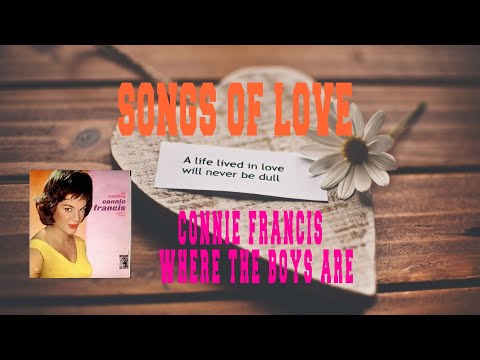
In 1960, Peggy Lee released the song on the album Pretty Eyes, then made it more popular when she performed it in front of a large television audience on The Ed Sullivan Show. As the song's popularity increased, it became better known as "Fly Me to the Moon", and in 1963 Peggy Lee convinced Bart Howard to make the name change official. Connie Francis released two non-English versions of the song in 1963: in Italian as "Portami Con Te" and in Spanish as "Llévame a la Luna".
Fly Me to the Moon Bossa Nova 1963 album by Joe Harnell
In 1962, Joe Harnell arranged and recorded an instrumental version in a bossa nova style. It was released as a single in late 1962. Harnell's version spent 13 weeks on the Billboard Hot 100 chart, reaching No. 14 on February 23, 1963, while reaching No. 4 on Billboard's Middle-Road Singles chart. Harnell's version was ranked No. 89 on Billboard's end of year ranking "Top Records of 1963".
Harnell's version was included on his album Fly Me to the Moon and the Bossa Nova Pops released in early 1963, which reached No. 3 stereo album on the Billboard Top LP's chart.
Frank Sinatra included the song on his 1964 album It Might as Well Be Swing, accompanied by Count Basie. The music for this album was arranged by Quincy Jones, who had worked with Count Basie a year earlier on the album This Time by Basie, which also included a version of "Fly Me to the Moon". Will Friedwald commented that "Jones boosted the tempo and put it into an even four/four" for Basie's version, but "when Sinatra decided to address it with the Basie/Jones combination they recharged it into a straight swinger... [which]...all but explodes with energy".
Bart Howard estimated that by the time Frank Sinatra covered the song in 1964, more than 100 other versions had been recorded. By 1995, it had been recorded more than 300 times. The Japanese animated series Neon Genesis Evangelion uses several versions of the song sung by Claire Littley, Yoko Takahashi, and various female cast members of the series for the closing music of each episode; the song was removed from the 2019 Netflix rerelease in most regions due to licensing issues, much to the dismay of fans.
Frank Sinatra's 1964 recording of "Fly Me to the Moon" became closely associated with NASA's Apollo space program. A copy of the song was played on a Sony TC-50 portable cassette player on the Apollo 10 mission which orbited the Moon, and also on Apollo 11 before the first landing on the Moon. The song's association with Apollo 11 was reprised many years later when Diana Krall sang it at the mission's 40th anniversary commemoration ceremony, and also for mission commander Neil Armstrong's memorial service in 2012.
The Sinatra version was also used in the 2000 NASA related fictional film Space Cowboys.
“Fly Me to the Moon“, originally titled “In Other Words”, is a song written in 1954 by Bart Howard. Kaye Ballard made the first recording of the song the year it was written. Frank Sinatra‘s 1964 version was closely associated with the Apollo missions to the Moon.
In 1999, the Songwriters Hall of Fame honored “Fly Me to the Moon” by inducting it as a “Towering Song”. The song was featured in the 2003 film Down With Love.
In 1954, when he began to write the song that became “Fly Me to the Moon”, Bart Howard had been pursuing a career in music for over 20 years. He played piano to accompany cabaret singers, but also wrote songs with Cole Porter, his idol, in mind. In response to a publisher’s request for a simpler song Bart Howard wrote a cabaret ballad which he titled “In Other Words”. A publisher tried to make him change some words from “fly me to the Moon” to “take me to the Moon,” but Howard refused. Many years later Howard commented that “… it took me 20 years to find out how to write a song in 20 minutes.”
He used his position as a piano accompanist and presenter at the Blue Angel cabaret venue to promote the song, and it was soon introduced in cabaret performances by Felicia Sanders.
Kaye Ballard circa late 1950s
Kaye Ballard made the song’s first commercial recording, and Decca released it in April 1954. A brief review published on 8 May 1954 in Billboard said that “In Other Words” was “…a love song sung with feeling by Miss Ballard.” This recording was released as the flipside of “Lazy Afternoon”, which Kaye Ballard was currently performing as star of the stage show The Golden Apple.
In 1960, Peggy Lee released the song on the album Pretty Eyes, then made it more popular when she performed it in front of a large television audience on The Ed Sullivan Show. As the song’s popularity increased, it became better known as “Fly Me to the Moon”, and in 1963 Peggy Lee convinced Bart Howard to make the name change official. Connie Francis released two non-English versions of the song in 1963: in Italian as “Portami Con Te” and in Spanish as “Llévame a la Luna”.
Fly Me to the Moon Bossa Nova 1963 album by Joe Harnell
In 1962, Joe Harnell arranged and recorded an instrumental version in a bossa nova style. It was released as a single in late 1962. Harnell’s version spent 13 weeks on the Billboard Hot 100 chart, reaching No. 14 on February 23, 1963, while reaching No. 4 on Billboard‘s Middle-Road Singles chart. Harnell’s version was ranked No. 89 on Billboard‘s end of year ranking “Top Records of 1963“.
Harnell’s version was included on his album Fly Me to the Moon and the Bossa Nova Pops released in early 1963, which reached No. 3 stereo album on the Billboard Top LP’s chart.
Frank Sinatra included the song on his 1964 album It Might as Well Be Swing, accompanied by Count Basie. The music for this album was arranged by Quincy Jones, who had worked with Count Basie a year earlier on the album This Time by Basie, which also included a version of “Fly Me to the Moon”. Will Friedwald commented that “Jones boosted the tempo and put it into an even four/four” for Basie’s version, but “when Sinatra decided to address it with the Basie/Jones combination they recharged it into a straight swinger… [which]…all but explodes with energy”.
Bart Howard estimated that by the time Frank Sinatra covered the song in 1964, more than 100 other versions had been recorded. By 1995, it had been recorded more than 300 times. The Japanese animated series Neon Genesis Evangelion uses several versions of the song sung by Claire Littley, Yoko Takahashi, and various female cast members of the series for the closing music of each episode; the song was removed from the 2019 Netflix rerelease in most regions due to licensing issues, much to the dismay of fans.
Frank Sinatra’s 1964 recording of “Fly Me to the Moon” became closely associated with NASA‘s Apollo space program. A copy of the song was played on a Sony TC-50 portable cassette player on the Apollo 10 mission which orbited the Moon, and also on Apollo 11 before the first landing on the Moon. The song’s association with Apollo 11 was reprised many years later when Diana Krall sang it at the mission’s 40th anniversary commemoration ceremony, and also for mission commander Neil Armstrong‘s memorial service in 2012.
The Sinatra version was also used in the 2000 NASA related fictional film Space Cowboys.
We firmly believe that the internet should be available and accessible to anyone, and are committed to providing a website that is accessible to the widest possible audience,
regardless of circumstance and ability.
To fulfill this, we aim to adhere as strictly as possible to the World Wide Web Consortium’s (W3C) Web Content Accessibility Guidelines 2.1 (WCAG 2.1) at the AA level.
These guidelines explain how to make web content accessible to people with a wide array of disabilities. Complying with those guidelines helps us ensure that the website is accessible
to all people: blind people, people with motor impairments, visual impairment, cognitive disabilities, and more.
This website utilizes various technologies that are meant to make it as accessible as possible at all times. We utilize an accessibility interface that allows persons with specific
disabilities to adjust the website’s UI (user interface) and design it to their personal needs.
Additionally, the website utilizes an AI-based application that runs in the background and optimizes its accessibility level constantly. This application remediates the website’s HTML,
adapts Its functionality and behavior for screen-readers used by the blind users, and for keyboard functions used by individuals with motor impairments.
If you’ve found a malfunction or have ideas for improvement, we’ll be happy to hear from you. You can reach out to the website’s operators by using the following email
Screen-reader and keyboard navigation
Our website implements the ARIA attributes (Accessible Rich Internet Applications) technique, alongside various different behavioral changes, to ensure blind users visiting with
screen-readers are able to read, comprehend, and enjoy the website’s functions. As soon as a user with a screen-reader enters your site, they immediately receive
a prompt to enter the Screen-Reader Profile so they can browse and operate your site effectively. Here’s how our website covers some of the most important screen-reader requirements,
alongside console screenshots of code examples:
Screen-reader optimization: we run a background process that learns the website’s components from top to bottom, to ensure ongoing compliance even when updating the website.
In this process, we provide screen-readers with meaningful data using the ARIA set of attributes. For example, we provide accurate form labels;
descriptions for actionable icons (social media icons, search icons, cart icons, etc.); validation guidance for form inputs; element roles such as buttons, menus, modal dialogues (popups),
and others. Additionally, the background process scans all of the website’s images and provides an accurate and meaningful image-object-recognition-based description as an ALT (alternate text) tag
for images that are not described. It will also extract texts that are embedded within the image, using an OCR (optical character recognition) technology.
To turn on screen-reader adjustments at any time, users need only to press the Alt+1 keyboard combination. Screen-reader users also get automatic announcements to turn the Screen-reader mode on
as soon as they enter the website.
These adjustments are compatible with all popular screen readers, including JAWS and NVDA.
Keyboard navigation optimization: The background process also adjusts the website’s HTML, and adds various behaviors using JavaScript code to make the website operable by the keyboard. This includes the ability to navigate the website using the Tab and Shift+Tab keys, operate dropdowns with the arrow keys, close them with Esc, trigger buttons and links using the Enter key, navigate between radio and checkbox elements using the arrow keys, and fill them in with the Spacebar or Enter key.Additionally, keyboard users will find quick-navigation and content-skip menus, available at any time by clicking Alt+1, or as the first elements of the site while navigating with the keyboard. The background process also handles triggered popups by moving the keyboard focus towards them as soon as they appear, and not allow the focus drift outside of it.
Users can also use shortcuts such as “M” (menus), “H” (headings), “F” (forms), “B” (buttons), and “G” (graphics) to jump to specific elements.
Disability profiles supported in our website
Epilepsy Safe Mode: this profile enables people with epilepsy to use the website safely by eliminating the risk of seizures that result from flashing or blinking animations and risky color combinations.
Visually Impaired Mode: this mode adjusts the website for the convenience of users with visual impairments such as Degrading Eyesight, Tunnel Vision, Cataract, Glaucoma, and others.
Cognitive Disability Mode: this mode provides different assistive options to help users with cognitive impairments such as Dyslexia, Autism, CVA, and others, to focus on the essential elements of the website more easily.
ADHD Friendly Mode: this mode helps users with ADHD and Neurodevelopmental disorders to read, browse, and focus on the main website elements more easily while significantly reducing distractions.
Blindness Mode: this mode configures the website to be compatible with screen-readers such as JAWS, NVDA, VoiceOver, and TalkBack. A screen-reader is software for blind users that is installed on a computer and smartphone, and websites must be compatible with it.
Keyboard Navigation Profile (Motor-Impaired): this profile enables motor-impaired persons to operate the website using the keyboard Tab, Shift+Tab, and the Enter keys. Users can also use shortcuts such as “M” (menus), “H” (headings), “F” (forms), “B” (buttons), and “G” (graphics) to jump to specific elements.
Additional UI, design, and readability adjustments
Font adjustments – users, can increase and decrease its size, change its family (type), adjust the spacing, alignment, line height, and more.
Color adjustments – users can select various color contrast profiles such as light, dark, inverted, and monochrome. Additionally, users can swap color schemes of titles, texts, and backgrounds, with over 7 different coloring options.
Animations – epileptic users can stop all running animations with the click of a button. Animations controlled by the interface include videos, GIFs, and CSS flashing transitions.
Content highlighting – users can choose to emphasize important elements such as links and titles. They can also choose to highlight focused or hovered elements only.
Audio muting – users with hearing devices may experience headaches or other issues due to automatic audio playing. This option lets users mute the entire website instantly.
Cognitive disorders – we utilize a search engine that is linked to Wikipedia and Wiktionary, allowing people with cognitive disorders to decipher meanings of phrases, initials, slang, and others.
Additional functions – we provide users the option to change cursor color and size, use a printing mode, enable a virtual keyboard, and many other functions.
Browser and assistive technology compatibility
We aim to support the widest array of browsers and assistive technologies as possible, so our users can choose the best fitting tools for them, with as few limitations as possible. Therefore, we have worked very hard to be able to support all major systems that comprise over 95% of the user market share including Google Chrome, Mozilla Firefox, Apple Safari, Opera and Microsoft Edge, JAWS and NVDA (screen readers), both for Windows and for MAC users.
Notes, comments, and feedback
Despite our very best efforts to allow anybody to adjust the website to their needs, there may still be pages or sections that are not fully accessible, are in the process of becoming accessible, or are lacking an adequate technological solution to make them accessible. Still, we are continually improving our accessibility, adding, updating and improving its options and features, and developing and adopting new technologies. All this is meant to reach the optimal level of accessibility, following technological advancements. For any assistance, please reach out to
























'))
Comments