





 Philharmonic Wind Orchestra
 Stradivari Orchestra
 The Ian Rich Orchestra
 The Hindley Street Country Club
 The Classic Rock Show
 sina-drums
 Backstage


Live and Let Die (James Bond Theme Song)
From Wikipedia, the free encyclopedia
| “Live and Let Die” | |
|---|---|
| |
| Single by Wings | |
| from the album Live and Let Die | |
| B-side | “I Lie Around“ |
| Released | 1 June 1973 |
| Studio | AIR (London, UK) |
| Genre | Symphonic rock hard rock |
| Length | 3:12 |
| Label | Apple |
| Songwriters | Paul McCartney Linda McCartney |
| Producer | George Martin |
| Paul McCartney and Wings singles chronology | |
| “My Love“ (1973)”Live and Let Die“ (1973)”Helen Wheels“ (1973) | |
| James Bond theme singles chronology | |
| “Diamonds Are Forever” (1971)”Live and Let Die“ (1973)”The Man With the Golden Gun” (1975) | |
“Live and Let Die” is the theme song of the 1973 James Bond film of the same name and its accompanying soundtrack album, performed by the British–American rock band Wings. Written by English musician Paul McCartney and his wife Linda McCartney, it reunited McCartney with former Beatles producer George Martin, who produced the song and arranged the orchestra. McCartney was contacted to write the song by the film’s producers Harry Saltzman and Albert R. Broccoli before the screenplay was finished.
Wings recorded “Live and Let Die” during the sessions for Red Rose Speedway in October 1972 at AIR Studios.It was also the first rock song to open a Bond film.
Another version by B. J. Arnau also appears in the film.
Upon release, “Live and Let Die” was the most successful Bond theme up to that point, reaching No. 1 on two of the three major US charts (though it only reached No. 2 on the Billboard Hot 100) and No. 9 on the UK Singles Chart. The song also received positive reviews from music critics and continues to be praised as one of McCartney’s best songs. It became the first Bond theme song to be nominated for the Academy Award for Best Original Song, but ultimately lost the award to Barbra Streisand‘s “The Way We Were” from the film of the same name at the 46th Academy Awards. It won Best Arrangement Accompanying Vocalist(s) at the 16th Annual Grammy Awards in 1974.
Wings performed “Live and Let Die” live during their concert tours and McCartney continues to play it on his solo tours, often using pyrotechnics during the instrumental breaks. It has been covered by several bands, including Guns N’ Roses, whose version appears on their 1991 album Use Your Illusion I. One of the more popular covers of the song, their version was nominated for the Grammy Award for Best Hard Rock Performance at the 35th Annual Grammy Awards in 1993. In 2012, McCartney was awarded the Million-Air Award from Broadcast Music, Inc. (BMI), for more than 4 million performances of the song in the US.
Background and recording
The beginning of the song has been stylistically compared to “Let It Be“, while the chorus has been called a “man-in-the-street’s impression of John Barry“.
Even before Tom Mankiewicz had finished writing the screenplay to Live and Let Die, producers Harry Saltzman and Albert R. Broccoli invited Paul McCartney to write the theme song. McCartney asked to be sent a copy of Ian Fleming‘s novel. “I read it and thought it was pretty good. That afternoon I wrote the song and went in the next week and did it … It was a job of work for me in a way because writing a song around a title like that’s not the easiest thing going.”
Originally, Saltzman was interested in having Shirley Bassey or Thelma Houston perform it instead of Wings. Producer George Martin said McCartney would allow the song to be used in the movie only if Wings was able to perform the song in the opening credits. The recording contract specified that McCartney would “perform the title song under the opening titles”.
The song featured an instrumental section that led to the Bridge Section with a few sung lines, before the main instrumental theme repeats. The sung Bridge section was necessary in order for the song to be nominated for Best Song, which required the song to have at least a minimum of eight sung lines. Otherwise, the song would have been disqualified from Oscar consideration.
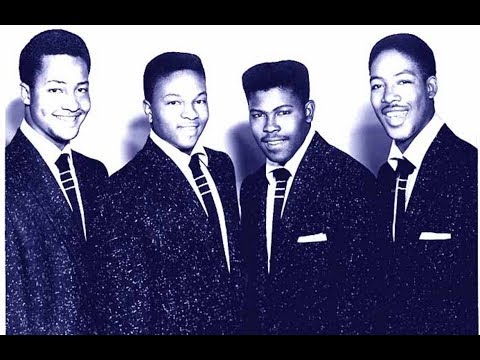
A second version of the song, performed by B. J. Arnau, also appears in the film. Arnau’s performance originally was meant for the group Fifth Dimension. The Arnau version of the song appears on the soundtrack album as a component in a medley that also contains two George Martin-composed instrumental pieces, “Fillet of Soul – New Orleans” and “Fillet of Soul – Harlem”. It was also released by RCA Records as a single in late June 1973.
Wings recorded “Live and Let Die” during the sessions for the Red Rose Speedway album, in October 1972. The song was recorded at AIR Studios, with Ray Cooper providing percussion instruments.
Release and aftermath
“Live and Let Die” was previewed in the 1973 television special James Paul McCartney, which aired on 16 April in the United States and 10 May in the United Kingdom. In the segment, McCartney and Wings were shown performing the song in his studio, while clips of the film were shown, before the film’s US theatrical release on 27 June.
In his contemporary review of the single for the NME, Ian MacDonald wrote: “McCartney’s fairly reasonable solution to the given problem ‘Write, in less than 25 bars, a theme-tune for the new James Bond movie’ is to ‘Let It Be‘ for the first half, wailing absently and with a curious notion of grammar, about this ‘ever changing world in which we live in’, before sitting back to let a 3,000-piece orchestra do a man-in-the-street’s impression of John Barry. It’s not intrinsically very interesting, but the film will help to sell it and vice versa.”
Billboard‘s contemporary review called it “the best 007 movie theme” to that time and one of McCartney’s most satisfying singles, by combining sweet melody, symphonic bombast and some reggae into one song. Cash Box said that the song was “absolutely magnificent in every respect”. Record World predicted that it “should have a long chart life”.
“Live and Let Die” reached No. 1 on two of the three major US charts, though only reached No. 2 on the US Billboard Hot 100 for three weeks. The single was certified Gold by the Recording Industry Association of America for sales of over one million copies.
Sales of the single release and of the sheet music were “solid”. The sheet music used the line “in this ever-changing world in which we live in” as part of the opening verse of the song. In the Washington Post interview more than 30 years later, McCartney told the interviewer, “I don’t think about the lyric when I sing it. I think it’s ‘in which we’re living’, or it could be ‘in which we live in’, and that’s kind of, sort of, wronger but cuter”, before deciding that it was “in which we’re living”.
“Live and Let Die” was not featured on a McCartney album until the Wings Greatest compilation in 1978, and was included again on 1987’s All the Best!, 2001’s Wingspan: Hits and History, 2016’s Pure McCartney, and in 2018 as a restored bonus track on a reissue of Red Rose Speedway. The entire soundtrack also was released in quadrophonic. It was also included on The 7″ Singles Box in 2022.
United Artists promoted the song in trade advertisements for Academy Award consideration, though producer Broccoli opposed the marketing tactic as unnecessary. The song became the first James Bond theme song to be nominated for an Academy Award for Best Original Song (garnering McCartney his second Academy Award nomination and Linda McCartney her first).
In the Academy Award performance of the song at the 46th Academy Awards, entertainer Connie Stevens dressed in a “silver-lamé outfit” with a Native American-looking headdress “descended from the ceiling” and then was “variously lifted and tossed about” by dancers dressed in various colours until she left the scene. The song lost to the eponymous theme song from the film The Way We Were.
In Wings’ live performances of the song, the instrumental break featured flashpots and a laser light show. McCartney has continued to play the song on his solo tours, often using pyrotechnics. “Live and Let Die” is the only song to appear on all of McCartney’s live albums (except for the 1991 acoustic-based Unplugged).
Following the 9/11 attacks, the song was placed on Clear Channel‘s list of inappropriate song titles.
The song with an extended introduction was included in the movie Shrek the Third (2007) and on its soundtrack.
It was also used to underscore the montage celebrating the 60th anniversary of the James Bond franchise, as presented at the 94th Academy Awards in 2022.
Thai singer Lisa performed “Live and Let Die” at the 97th Academy Awards as part of a musical tribute to James Bond.
Personnel
- Paul McCartney – lead vocals, piano
- Linda McCartney – backing vocals, keyboard
- Denny Laine – backing vocals, bass guitar
- Henry McCullough – lead guitar
- Denny Seiwell – drums
- Ray Cooper – percussion
- George Martin – orchestral arrangement
Charts
Weekly charts
| Chart (1973) | Peak position |
|---|---|
| Australia (Kent Music Report) | 5 |
| Belgium (Ultratop 50 Wallonia) | 32 |
| Canada (RPM 100 Top Singles) | 2 |
| Japan (Oricon) | 25 |
| Netherlands (Dutch Top 40) | 27 |
| Netherlands (Single Top 100) | 29 |
| New Zealand (Listener) | 20 |
| Norway (VG-lista) | 2 |
| UK Singles (OCC) | 9 |
| US Billboard Hot 100 | 2 |
| US Billboard Easy Listening | 8 |
| US Cash Box Top 100 | 1 |
| US Record World Singles Chart | 1 |
| West Germany (GfK) | 31 |
Year-end charts
| Chart (1973) | Rank |
|---|---|
| Australia | 36 |
| Canada | 39 |
| US Cash Box | 33 |
| US Billboard Hot 100 | 56 |
Certifications
| Region | Certification | Certified units/sales |
|---|---|---|
| United Kingdom (BPI) | Silver | 200,000‡ |
| United States (RIAA) | Gold | 1,000,000^ |
| ^ Shipments figures based on certification alone. ‡ Sales+streaming figures based on certification alone. | ||
Unreleased “Weird Al” Yankovic parody
In 1984, McCartney asked “Weird Al” Yankovic when he was going to parody one of his songs. In 1992, Yankovic asked for permission to put his parody “Chicken Pot Pie” on an album. McCartney denied the use because he is a vegetarian and did not want to promote the consumption of meat. Yankovic, a vegetarian himself, said he respected the decision; however, he has performed the song live in the 1990s as part of a food-themed medley.
Guns N’ Roses version
| “Live and Let Die” | |
|---|---|
| |
| Single by Guns N’ Roses | |
| from the album Use Your Illusion I | |
| B-side | “Live and Let Die” (live) |
| Released | 9 December 1991 |
| Genre | Hard rock, symphonic rock |
| Length | 3:04 |
| Label | Geffen Uzi Suicide |
| Songwriters | Paul McCartney Linda McCartney |
| Producers | Mike Clink Guns N’ Roses |
| Guns N’ Roses singles chronology | |
| “Don’t Cry“ (1991)”Live and Let Die“ (1991)”November Rain“ (1992) | |
American rock band Guns N’ Roses covered “Live and Let Die” in 1991. It was released as the second single from their 1991 album, Use Your Illusion I, and the fourth out of all the Use Your Illusion singles. This cover was commercially successful and was nominated for the Grammy Award for Best Hard Rock Performance at the 35th Annual Grammy Awards in 1993. It was voted third best cover song in a 2008 poll by Total Guitar.
In the April 1992 issue of Guitar for the Practicing Musician, Slash explained to John Stix how the group came to record the song:
It’s one of those songs, like “Heaven’s Door,” that Axl and I have always loved. It’s always been a really heavy song, but we’d never discussed it, and didn’t know that we each liked it. We were talking one night about a cover song and that came up, and we were like, “Yeah! Let’s do it!” So I went to rehearsal with Izzy and Matt and Duff, just to see whether we could sound good playing it, and it sounded really heavy.
In his 2007 self-titled memoir, Slash credits Axl Rose for his synthesizer work on the track, writing, “When we did ‘Live and Let Die’, it was all synths – those horns are not horns. What Axl did there was really complex; he spent hours dialing all that shit in, getting the nuances just right, and I have to give him that.”
Guns N’ Roses’ cover charted at No. 20 on the US Billboard Album Rock Tracks chart and No. 33 on the Billboard Hot 100. Worldwide, the single reached the top five on the Irish Singles Chart, in Norway, and the UK Singles Chart. In Finland, it became the third consecutive number-one single from the Use Your Illusion albums, and it also reached No. 1 in New Zealand for two weeks. A music video was made in November 1991 featuring the band playing live on stage and showing old pictures. The video also was made shortly before Izzy Stradlin’s departure, and it is the last video in which he appears.
Guns N’ Roses’ version of this song appears on the soundtrack of the 1997 movie Grosse Pointe Blank.
In May 2020, Guns N’ Roses’ version of this song played while President Donald Trump visited a Phoenix, Arizona medical mask factory that was producing masks to prevent deaths during the COVID-19 pandemic, which had killed over 250,000 people worldwide at the time. Although White House directives had encouraged all Americans to wear masks in public during this period, Trump did not don a mask while this song played. Later that month, the band unveiled a new t-shirt on their website branded “Live N’ Let Die With COVID 45” in reference to Trump’s factory visit. All proceeds from sales of the t-shirt were donated to the Recording Academy’s MusiCares, which provides services and resources to those in need in the music community.
Track listing
- “Live and Let Die” – 2:59
- “Live and Let Die” (Live from Wembley Stadium, August 31, 1991.) – 3:37
3. “Shadow of Your Love” (Live) – 2:50
Personnel
Guns N’ Roses
- W. Axl Rose – lead vocals, keyboard, programming, backing vocals
- Slash – lead guitar, 6-string bass
- Izzy Stradlin – rhythm guitar
- Duff McKagan – bass
- Matt Sorum – drums
- Dizzy Reed – keyboards
Additional musicians
- Shannon Hoon – backing vocals
- Johann Langlie – programming
- Jon Trautwein – horn
- Matthew McKagan – horn
- Rachel West – horn
- Robert Clark – horn
Charts
Weekly charts
| Chart (1991–1992) | Peak position |
|---|---|
| Australia (ARIA) | 10 |
| Austria (Ö3 Austria Top 40) | 27 |
| Belgium (Ultratop 50 Flanders) | 20 |
| Europe (Eurochart Hot 100) | 7 |
| Finland (Suomen virallinen lista) | 1 |
| France (SNEP) | 39 |
| Germany (GfK) | 33 |
| Greece (IFPI) | 10 |
| Ireland (IRMA) | 5 |
| Luxembourg (Radio Luxembourg) | 6 |
| Netherlands (Dutch Top 40) | 12 |
| Netherlands (Single Top 100) | 13 |
| New Zealand (Recorded Music NZ) | 1 |
| Norway (VG-lista) | 3 |
| Portugal (AFP) | 3 |
| Sweden (Sverigetopplistan) | 15 |
| Spain (AFYVE) | 14 |
| Switzerland (Schweizer Hitparade) | 19 |
| UK Singles (OCC) | 5 |
| US Billboard Hot 100 | 33 |
| US Mainstream Rock (Billboard) | 20 |
| US Cashbox Top 100 | 26 |
Year-end charts
| Chart (1992) | Position |
|---|---|
| New Zealand (Recorded Music NZ) | 27 |
Certifications
| Region | Certification | Certified units/sales |
|---|---|---|
| Australia (ARIA) | Gold | 35,000‡ |
| New Zealand (RMNZ) | Platinum | 30,000‡ |
| United Kingdom (BPI) | Silver | 200,000‡ |
| ‡ Sales+streaming figures based on certification alone. | ||
Release history
| Region | Date | Format(s) | Label(s) |
|---|---|---|---|
| United Kingdom | 9 December 1991 | 7-inch vinyl12-inch vinylCDcassette | |
| Japan | 5 February 1992 | Mini-CD |
Other Live And Let Die Covers
- David Garrett
- 2cellos & Lang Lang
- Danish National Symphony Orchestra & Caroline Henderson
- Menno Roymans (Live Ochestra)
- Mike Masse feat. Rubber Souls & Denver Pops
- Katiuska McLean
- Billy Joel (ft. Axl Rose)
- Alexandra Burke
- Piedmont Symphony Orchestra
Live and Let Die (Film)
| Live and Let Die | |
|---|---|
| |
| Directed by | Guy Hamilton |
| Screenplay by | Tom Mankiewicz |
| Based on | Live and Let Die by Ian Fleming |
| Produced by | Harry Saltzman Albert R. Broccoli |
| Starring | Roger Moore Yaphet Kotto Jane Seymour |
| Cinematography | Ted Moore |
| Edited by | Bert Bates Raymond Poulton John Shirley |
| Music by | George Martin |
| Production company | Eon Productions |
| Distributed by | United Artists |
| Release dates | 27 June 1973 (United States) 12 July 1973 (United Kingdom) |
| Running time | 121 minutes |
| Countries | United Kingdom United States |
| Language | English |
| Budget | $7 million |
| Box office | $161.8 million |
Live and Let Die is a 1973 spy film, the eighth film in the James Bond series produced by Eon Productions, the first to star Roger Moore as the fictional MI6 agent James Bond, and the third in the series directed by Guy Hamilton. It was produced by Albert R. Broccoli and Harry Saltzman, while Tom Mankiewicz wrote the script.
It is based on Ian Fleming‘s 1954 novel. The storyline involves a drug lord in Harlem, New York City, known as Mr. Big, who plans to distribute two tons of heroin for free to put rival drug lords out of business and then become a monopoly supplier. Mr. Big is revealed to be the alter ego of Dr. Kananga, a corrupt Caribbean dictator who rules San Monique, a fictional island where opium poppies are secretly farmed. Bond is investigating the deaths of three British agents, leading him to Kananga, and he is soon trapped in a world of gangsters and voodoo as he fights to put a stop to Kananga’s scheme.
Live and Let Die was released during the height of the blaxploitation era in American cinema, and it depicts many blaxploitation archetypes and clichés, including derogatory racial epithets (“honky“), black gangsters, and pimpmobiles. It departs from the former plots of the Bond films about megalomaniacal supervillains, and instead focuses on drug trafficking, a common theme of blaxploitation films of the period. It is set in African American cultural centres such as Harlem and New Orleans, as well as Caribbean islands. It was also the first Bond film featuring an African American Bond girl romantically involved with 007, Rosie Carver, who is portrayed by Gloria Hendry.
It was a box-office success and received generally positive reviews from critics. Its title song, written by Paul and Linda McCartney and performed by their band Wings, was also nominated for the Academy Award for Best Original Song.
Live and Let Die was followed by The Man with the Golden Gun the following year in 1974.
Plot
Three MI6 agents are killed under mysterious circumstances within 24 hours in the United Nations headquarters in New York City, in New Orleans, and the small Caribbean nation of San Monique, while monitoring the operations of the island’s dictator, Dr. Kananga. James Bond, Agent 007, is sent to New York to investigate. Kananga is also in New York, visiting the United Nations. After Bond arrives, his driver is assassinated by Whisper, one of Kananga’s men, while driving Bond to Felix Leiter of the Central Intelligence Agency (CIA). Bond is nearly killed in the ensuing car crash.

The killer’s licence plate leads Bond to Harlem, where he meets Mr. Big, a mob boss who runs a chain of restaurants throughout the United States, but Bond and the CIA do not understand why the most powerful black gangster in New York works with an unimportant island’s leader. Bond meets Solitaire, a beautiful tarot reader who has the power of the Obeah and can see both the future and remote events in the present. Mr. Big demands that his henchmen kill Bond, but Bond overpowers them and escapes with the help of CIA agent Strutter. Bond flies to San Monique, where he meets Rosie Carver, a local CIA agent. They meet up with Bond’s ally Quarrel Jr., who takes them by boat near Solitaire’s home. When Bond suspects Rosie of being a double agent for Kananga, Rosie tries to escape but is killed remotely by Kananga. Bond then uses a stacked deck of tarot cards that show only “The Lovers” to trick Solitaire into thinking that fate is meant for them; Bond then seduces her. Having lost her virginity and thus her ability to foretell the future, Solitaire realises she would be killed by Kananga, so she agrees to co-operate with Bond. The next day, Bond and Solitaire discover that Kananga has large poppy fields hidden from view.
Bond and Solitaire escape by boat and fly to New Orleans. There, Bond is captured by Mr. Big, who removes a prosthetic face and reveals himself to be Kananga. He has been producing heroin and is protecting the poppy fields by exploiting the San Monique locals’ fear of the occult and the voodoo priest Baron Samedi. As Mr. Big, Kananga plans to distribute the heroin free of charge at his restaurants, which will increase the number of addicts. He intends to bankrupt other drug dealers with his giveaway, then charge high prices for his heroin later in order to capitalise on the huge drug dependencies he has cultivated.
Furious at Solitaire for having sex with Bond and losing her ability to read tarot cards, Kananga turns her over to Baron Samedi to be sacrificed. Kananga’s henchmen, one-armed Tee Hee and tweed-jacketed Adam, leave Bond to be eaten by crocodilia at his farm in the Deep South backwoods. Bond uses the backs of the reptiles to escape to safety. After setting their drug laboratory on fire, he steals a speedboat and escapes, pursued by Kananga’s men under Adam’s order, and later Sheriff J.W. Pepper and the Louisiana State Police. Most pursuers get wrecked or left behind, and Adam is killed in a boat crash by Bond.
Bond travels to San Monique and with the help of Quarrel Jr. sets timed explosives throughout the poppy fields. He rescues Solitaire from the voodoo sacrifice just as the explosives destroy the fields, and whilst fighting Samedi, Bond punches him and he falls into a coffin of venomous snakes. Bond and Solitaire escape below ground into Kananga’s lair. Kananga captures them both and proceeds to lower them into a shark tank. However, Bond escapes and forces Kananga to swallow a compressed-gas pellet used in shark guns, causing him to inflate and explode.
Leiter puts Bond and Solitaire on a train leaving for New York. Tee Hee sneaks aboard and attempts to kill Bond, but Bond cuts the wires of his prosthetic arm and throws him out the window. As the film ends, a laughing Samedi is revealed to be riding on the front of the train.
Cast

- Roger Moore as James Bond – 007, a British MI6 agent who is sent on a mission to investigate the murder of three fellow agents.
- Yaphet Kotto as Dr. Kananga / Mr. Big, a corrupt Caribbean Prime Minister who doubles as a drug lord.
- Jane Seymour as Solitaire, Kananga’s psychic and Bond’s love interest.
- Clifton James as Sheriff J.W. Pepper, an uncouth Louisiana sheriff.
- Julius W. Harris as Tee Hee Johnson, Kananga’s primary henchman who wears a pincer-tipped prosthetic arm.
- Geoffrey Holder as Baron Samedi, Kananga’s henchman who has ties to the Voodoo occult.
- David Hedison as Felix Leiter, Bond’s CIA colleague who is also investigating Mr. Big.
- Gloria Hendry as Rosie Carver, a junior CIA agent in San Monique, secretly working for Kananga.
- Bernard Lee as M, the Head of the Secret Intelligence Service
- Lois Maxwell as Miss Moneypenny, M’s secretary.
- Tommy Lane as Adam, one of Dr. Kananga’s henchmen who pursues 007 through the Louisiana Bayou.
- Earl Jolly Brown as Whisper, Kananga’s henchman who only whispers.
- Roy Stewart as Quarrel Jr., Bond’s ally in San Monique and son of Quarrel from Dr. No.
- Lon Satton as Harry Strutter, a CIA agent who assists Bond in New York.
- Arnold Williams as Cab Driver 1, a jokey New York taxi driver and one of Kananga’s men.
- Ruth Kempf as Mrs. Bell, a student pilot who gets caught up in Bond’s escaping from Kananga’s men.
- Joie Chitwood as Charlie, a CIA agent.
- Madeline Smith as Miss Caruso (“Beautiful Girl”), an Italian agent whom Bond briefly romances at the beginning of the film.
- Michael Ebbin as Dambala, one of Kananga’s henchmen in San Monique and a voodoo priest who taunts and kills his victims with a snake.
- Kubi Chaza as Sales Girl, a cashier at the Oh Cult Voodoo Shop in New York, and informant for Kananga.
- B. J. Arnau as a cabaret singer, who performs a rendition of the movie’s theme at a Fillet of Soul restaurant.
Production
Writing
While filming Diamonds Are Forever, Live and Let Die was chosen as the next Ian Fleming novel to be adapted because the screenwriter Tom Mankiewicz had thought it would be daring to use black villains, as the Black Panthers and other racial movements were active at this time.
Guy Hamilton was again chosen to direct and, since he was a jazz fan, Mankiewicz suggested he film in New Orleans. Hamilton did not want to use Mardi Gras since Thunderball (1965) featured Junkanoo, a similar festivity, so after more discussions with the writer and location scouting with helicopters, he decided to use two well-known features of the city, the jazz funerals and the canals.
To develop a better feel of how Voodoo was practised, Saltzman and Broccoli escorted Hamilton, Mankiewicz, and production designer Syd Cain to scout New Orleans further and then the islands of the West Indies. Haiti was an important destination of the tour and not only did Fleming connect it with the religion, there were many practitioners available to witness. Despite viewing actual Voodoo demonstrations, due to political unrest in the country at the time it was decided not to film in Haiti. Instead, they chose to film in Jamaica.

While searching for locations in Jamaica, the crew discovered a crocodile farm in Falmouth owned by Ross Kananga, after passing a sign warning that “trespassers will be eaten”. The crocodile farm was put into the script and also inspired Mankiewicz to name the film’s villain after Kananga.
Richard Maibaum later claimed he was asked to write the film but declined because he was too busy. He disliked the completed film, saying, “to process drugs in the middle of the jungle is not a Bond caper.”
Casting
Broccoli and Saltzman tried to convince Sean Connery to return as James Bond, but he declined. At the same time, United Artists considered Steve McQueen and Paul Newman for the role. According to Burt Reynolds, Broccoli subsequently approached him for the role, but Reynolds felt Bond should be played by a British actor and turned the offer down. Among the actors to test for the part of Bond were Julian Glover (who would portray Aristotle Kristatos in For Your Eyes Only (1981)), John Gavin, Jeremy Brett, Simon Oates, John Ronane, and William Gaunt. The main frontrunner for the role was Michael Billington. Broccoli met Anthony Hopkins to discuss the role, but Hopkins did not think he was right for it.
Meanwhile, United Artists was still pushing to cast an American to play Bond, but Broccoli insisted that the part should be played by a British actor and put forward Roger Moore. Moore, who had been considered for the role in Dr. No (1962) and On Her Majesty’s Secret Service (1969), was ultimately hired. After Moore was chosen, Billington remained on the top of the list in the event that Moore declined to come back for the next film. Billington played a brief role in the pre-credit sequence of The Spy Who Loved Me (1977).
Moore tried not to imitate either Connery’s or his own prior performance as Simon Templar in The Saint, and Mankiewicz fitted the screenplay into Moore’s persona by giving more comedic scenes and a light-hearted approach to Bond.
Mankiewicz had thought of turning Solitaire into a Black woman, and Diana Ross was his first choice. Broccoli and Saltzman decided to stick to Fleming’s description of a white woman and, after considering Catherine Deneuve, cast Jane Seymour, who was in the television series The Onedin Line. After Solitaire was cast with a white actress, the character of Rosie Carver was switched to be a black woman and cast with Gloria Hendry. Yaphet Kotto was cast while doing another film for United Artists, Across 110th Street (1972). Kotto reported one of the things he liked in the role was Kananga’s interest in the occult, “feeling like he can control past, present and future”.
Mankiewicz created the character Sheriff J. W. Pepper to add comic relief. Clifton James reprised the role in The Man with the Golden Gun the following year.
Live and Let Die is also the first of two films featuring David Hedison as Felix Leiter, who reprised the role in Licence to Kill (1989). Hedison had said, “I was sure that would be my first and last” appearance as the character, before being cast again.
Madeline Smith, who played Miss Caruso, sharing Bond’s bed in the film’s opening, was recommended for the part by Roger Moore after he had appeared with her on television. Smith said that Moore was polite and pleasant to work with, but she felt very uncomfortable being clad in only blue bikini panties while Moore’s wife was on set overseeing the scene.
Live and Let Die was the only Bond film until Casino Royale (2006) not to feature the character Q, portrayed by Desmond Llewelyn. He was then appearing in the television series Follyfoot, but was written out of three episodes to appear in the film. By then, Saltzman and Broccoli decided not to include the character, feeling that “too much was being made of the films’ gadgets”, and decided to downplay this aspect of the series, much to Llewelyn’s annoyance.
Bernard Lee considered not reprising his role as M due to the death of his wife Gladys Merredew, and was nearly recast with Kenneth More. However, he ultimately returned to the role.
Lois Maxwell had only been included in Diamonds Are Forever (1971) during filming as a late addition, as she had asked for a pay increase. For Live and Let Die, she returned for the same fee, but due to a technical error, the filming of her scenes in Bond’s home at the start extended to two days, costing the production more than if they had paid the increase she requested. Moore later wrote that Maxwell celebrated the double-pay-day by purchasing a fur coat.
Filming
Principal photography began on 13 October 1972 in New Orleans, Louisiana. For a while, only the second unit was shooting after Moore was diagnosed with kidney stones. Hamilton initially wanted to film in Haiti, which the fictional San Monique was modeled after, but could not because of the political instability under the regime of François “Papa Doc” Duvalier. In November, the production moved to Jamaica, which represented San Monique. In December, production was divided between interiors in Pinewood Studios in Iver Heath and location shooting in Harlem in New York City. The producers were reportedly required to pay protection money to a local Harlem gang to ensure the crew’s safety. When the money ran out, they were forced to leave. Some exteriors were in fact shot on the Upper East Side of Manhattan as a result of the difficulties of using real Harlem locations. The street chase was shot at FDR Drive.
Ross Kananga suggested the stunt of Bond jumping on crocodiles, and was enlisted by the producers to perform it. The scene took five attempts to complete.
In one attempt, the last crocodile caught Kananga’s heel and tore his trousers.
The production had trouble with snakes during the voodoo ceremony scene in Jamaica. The script supervisor was so afraid that she refused to be on set with them, an actor fainted while filming a scene where he is killed by a snake, Jane Seymour became terrified as a snake was held up to her face, and Geoffrey Holder only agreed to fall into the snake-filled casket because Princess Alexandra was visiting the set. Despite being told by the prop supervisor that the snakes had all been defanged, Holder told Moore that it did not feel like they had. During filming, Seymour was tied up to a stake while a dancer was to approach her with a snake. The snake bit him and he dropped it, drawing everyone’s attention to him. Meanwhile the snake headed for Seymour, who was saved by the film’s snake handler grabbing it when inches from Seymour’s feet.
The boat chase was filmed in Louisiana around the Irish Bayou area, with some interruption caused by flooding. 26 boats were built by the Glastron boat company for the film. 17 were destroyed during rehearsals. The speedboat jump scene over the bayou, filmed with the assistance of a specially-constructed ramp, unintentionally set a Guinness World Record at the time with 110 feet (34 m) cleared. The waves created by the impact caused the following boat to flip over.
The escape in a double-decker bus was filmed using a modified former London bus that had its top deck removed and remounted on rollers so it would slide off on impact with the low bridge. The top deck was bolted in position for all other filming.
The stunts involving the bus were performed by Maurice Patchett, a London Transport bus driving instructor.
Salvador Dalí was approached in 1973 to design a Surrealist tarot deck for the film. However, his fee was too expensive for the film budget. At the end, the deck used in the film was designed by Fergus Hall. Dalí kept working at the deck and released it in 1984.
Music

John Barry, who had worked on the previous seven films, was unavailable during production as he was working on the stage musical Billy. Broccoli and Saltzman instead asked Paul McCartney to write the theme song. Saltzman, mindful of his decision not to produce A Hard Day’s Night (1964), was especially eager to work with McCartney. Since McCartney’s salary was high and another composer could not be hired with the remainder of the music budget, George Martin, who had been McCartney’s producer while with the Beatles, was chosen to write the score for the film.
“Live and Let Die“, written by McCartney along with his wife Linda and performed by their group Wings, was the first true rock and roll song used to open a Bond film, and became a major success in the UK (where it reached number nine in the charts) and the US (where it reached number two, for three weeks). It was nominated for an Academy Award, but lost to “The Way We Were“. Saltzman and Broccoli hired B. J. Arnau to record and perform the title song, not realising McCartney intended to perform it. Arnau’s version was featured in the film, when the singer performs it in a night club that Bond visits.
In the pre-titles sequence, the Olympia Brass Band performed a funeral march observed by an MI6 agent. The first musical piece at the beginning of the funeral march is “Just a Closer Walk with Thee“. The trumpeter Alvin Alcorn portrayed the knife-wielding assassin. After the agent is fatally stabbed, the band starts playing the more lively “New Second Line” (also known as “Joe Avery’s Piece”), created by Milton Batiste.
Live and Let Die (Soundtrack)
| Live and Let Die | |
|---|---|
| |
| Soundtrack album by George Martin | |
| Released | 2 July 1973 |
| Recorded | 1972–73 |
| Studio | AIR (London) |
| Length | 31:14 |
| Label | United Artists |
| Producer | George Martin |
| George Martin chronology | |
| London by George (1967)Live and Let Die (1973)Beatles to Bond and Bach (1978) | |
| James Bond soundtrack chronology | |
| Diamonds Are Forever (1971)Live and Let Die (1973)The Man with the Golden Gun (1974) | |
| Singles from Live and Let Die | |
| “Live and Let Die“ Released: 1 June 1973 | |
Live and Let Die is the soundtrack to the eighth James Bond film of the same name, scored by George Martin. The title song was written by Paul and Linda McCartney and performed by Paul McCartney and Wings. It was the first Bond film score to not involve John Barry.
History
The music for most of the James Bond films up until Diamonds Are Forever in 1971 had been scored by John Barry. Due to Barry’s work on the musical Billy, and having fallen out with Bond producer Harry Saltzman over the last title song sung by Shirley Bassey, Barry was unavailable to score Live and Let Die.
Producers Saltzman and Albert Broccoli approached Paul McCartney to write the theme song and McCartney in turn asked George Martin to record it for him. Impressed with the orchestration for the finished track by Paul McCartney and Wings, “Live and Let Die“, Saltzman and Broccoli considered Martin for the film’s score.
Martin worked closely with director Guy Hamilton who described what the music should convey in each scene as it unfolds. Only very minor changes to the finished score were asked for by Hamilton. Martin felt that this was as much for Hamilton’s accurate briefing.
The orchestra was conducted by Martin and recorded at AIR Studios. The soundtrack was also released in quadrophonic.
Title song
Having recorded McCartney’s performance, Martin was taken aback when Saltzman asked him who he thought should sing the film’s title song, suggesting to him Thelma Houston. Saltzman had envisaged a female soul singer. Martin said that it should be McCartney. The recording contract had specified that McCartney would “perform the title song under the opening titles”. Martin nonetheless scored a soul arrangement to accompany singer B. J. Arnau for a nightclub sequence in the film.
Live and Let Die was the first time that a rock music arrangement was used to open a Bond film. It was also the first time that McCartney and Martin had worked together since Abbey Road in 1969. McCartney had been considered as title song composer for the previous Bond film, Diamonds Are Forever. The song was nominated for an Academy Award for Best Original Song at the 46th Academy Awards but lost to “The Way We Were” from the film of the same name.
The ″Live and Let Die” single was a major success in the U.S. and UK and continues to be a highlight of McCartney’s live shows. Chrissie Hynde covered the song for future Bond composer David Arnold‘s 1997 compilation album Shaken and Stirred: The David Arnold James Bond Project.
Track listing
The original soundtrack LP ended with track 14, “James Bond Theme”, and this version was released on CD in 1988. The digitally remastered CD re-release, 2003, as well as adding eight additional tracks, extended several of the original ones, such as “Bond Meets Solitaire“. Except as noted, all tracks composed by George Martin. In 2023, La La Land Records released a 2 disc expanded edition for the 50th anniversary of the movie.
1973 release
2. “Just a Closer Walk with Thee (Trad. Arr. Milton Batiste) /New Second Line (Milton Batiste)” – Harold A. “Duke” Dejan & The Olympia Brass Band
4. “Whisper Who Dares”
5. “Snakes Alive”
6. “Baron Samedi‘s Dance of Death”
7. “San Monique”
8. “Fillet of Soul – New Orleans/Live and Let Die/Fillet of Soul – Harlem” – B. J. Arnau
9. “Bond Drops In”
10. “If He Finds It, Kill Him”
11. “Trespassers Will Be Eaten”
12. “Solitaire Gets Her Cards”
13. “Sacrifice”
14. “James Bond Theme” (Monty Norman)
2003 release
- “Live and Let Die (Main Title) (Paul and Linda McCartney)” – Paul McCartney and Wings
- “Just a Closer Walk with Thee (Trad. Arr. Milton Batiste) /New Second Line (Milton Batiste)” – Harold A. “Duke” Dejan & The Olympia Brass Band
- “Bond Meets Solitaire”
- “Whisper Who Dares”
- “Snakes Alive”
- “Baron Samedi’s Dance of Death”
- “San Monique”
- “Fillet of Soul – New Orleans/Live and Let Die/Fillet of Soul – Harlem” – B. J. Arnau
- “Bond Drops In”
- “If He Finds It, Kill Him”
- “Trespassers Will Be Eaten”
- “Solitaire Gets Her Cards”
- “Sacrifice”
- “James Bond Theme” (Monty Norman)
- “Gunbarrel/Snakebit”
- “Bond to New York”
- “San Monique (Alternate)”
- “Bond and Rosie”
- “The Lovers”
- “New Orleans”
- “Boat Chase”
- “Underground Lair”
- contains the “James Bond Theme”, originally composed for the Dr. No soundtrack
2023 release
Disc 1
- “Gun Barrel / Voodoo Ceremony” (1:30)
- “Live and Let Die (Main Title)” (Performed by Paul McCartney and Wings) (3:11)
- “Bond to New York” (1:26)
- “Whisper Who Dares” (1:44)
- “Oh Cult Voodoo Shop” (1:18)
- “James Bond Theme (Film Version)” (1:45)
- “Bond Meets Solitaire (Extended Version)” (2:54)
- “Baron Samedi’s Dance of Death (Film Version)” (1:43)
- “San Monique” (1:58)
- “Snakes Alive (Film Version)” (2:41)
- “Bond and Rosie” (1:04)
- “Fortune Telling” (0:46)
- “Rosie Flees” (2:05)
- “Bond Drops In (Film Version)” (0:55)
- “The Lovers” (2:18)
- “If He Finds It, Kill Him” (1:21)
- “Low Bridge” (0:59)
- “New Orleans” (1:02)
- “Just a Closer Walk with Thee / New Second Line” (Performed by Harold A. “Duke” Dejan & The Olympia Brass Band) (2:19)
- “Fillet of Soul – New Orleans / Live and Let Die / Fillet of Soul” – Harlem (Performed by B.J. Arnau) (3:18)
- “Bond’s Watch” (0:58)
- “Solitaire Gets Her Cards” (1:51)
- “Trespassers Will Be Eaten (Extended Version)” (2:49)
- “Boat Chase” (2:04)
- “Sacrifice (Film Version)” (3:22)
- “Underground Lair” (4:01)
- “On the Train / Finale” (3:04)
Disc 2
- “Live and Let Die (Main Title)” (Performed by Paul McCartney and Wings) (3:11)
- “Just a Closer Walk with Thee / New Second Line” (Performed by Harold A. “Duke” Dejan & The Olympia Brass Band) (2:19)
- “Bond Meets Solitaire” (2:16)
- “Whisper Who Dares” (1:44)
- “Snakes Alive” (2:28)
- “Baron Samedi’s Dance Of Death” (1:14)
- “San Monique” (1:58)
- “Fillet of Soul – New Orleans / Live and Let Die / Fillet of Soul – Harlem” (Performed by B.J. Arnau) (3:18)
- “Bond Drops In” (3:28)
- “If He Finds It, Kill Him” (1:21)
- “Trespassers Will Be Eaten” (2:46)
- “Solitaire Gets Her Cards” (1:51)
- “Sacrifice” (2:31)
- “James Bond Theme” (1:29)
- “San Monique (Early Version)” (2:47)
- “Boat Chase Pt. 1 (Early Version)” (1:51)
- “Fillet of Soul – New Orleans / Live and Let Die / Fillet of Soul – Harlem (Alternate)” (Performed by B.J. Arnau) (3:19)
- “Underground Lair (Alternate Opening)” (0:37)
- “Sacrifice (Extended Album Version)” (3:22)
- “Baron Samedi’s Dance of Death (Extended Album Version)” (1:43)
Release and reception
The film was released in the United States on 27 June 1973. The world premiere was at Odeon Leicester Square in London on 6 July 1973, with general release in the United Kingdom on the same day. From a budget of around $7 million ($50 million in 2024 dollars), the film grossed $161.8 million ($1,146 million in 2024 dollars) worldwide.
It holds the record for the most-viewed broadcast film on television in the United Kingdom by attracting 23.5 million viewers when premiered on ITV on 20 January 1980.
Contemporary reviews
Roger Ebert of the Chicago Sun-Times stated that Moore “has the superficial attributes for the job: The urbanity, the quizzically raised eyebrow, the calm under fire and in bed”. However, he felt that Moore was not satisfactory in living up to the legacy left by Sean Connery in the preceding films. He rated the villains “a little banal”, adding that the film “doesn’t have a Bond villain worthy of the Goldfingers, Dr. Nos and Oddjobs of the past.” Richard Schickel, reviewing for Time magazine, described the film as “the most vulgar addition to a series that has long since outlived its brief historical moment — if not, alas, its profitability.” He also criticised the action sequences as excessive, but noted that “aside an allright speedboat spectacular over land and water, the film is both perfunctory and predictable—leaving the mind free to wander into the question of its overall taste. Or lack of it.”
Roger Greenspun of The New York Times praised Moore as “a handsome, suave, somewhat phlegmatic James Bond—with a tendency to throw away his throwaway quips as the minor embarrassments that, alas, they usually are.” He was critical of Jane Seymour and Yaphet Kotto, the latter of whom he felt “does not project evil.”
In summary, he remarked the film was “especially well photographed and edited, and it makes clever and extensive use of its good title song, by Paul and Linda McCartney.” Charles Champlin of the Los Angeles Times likened Moore as “a handsome and smoothly likable successor to Sean Connery as James Bond.”
He further noted that the script “uses only the bare bones of Fleming’s story about evil doings which link Harlem with a mysterious Caribbean island. The level of invention is high, but now and again you do sense the strain of always having to try harder because you’re No. 1. If one menacing viper is good, three or a coffinful full are not inevitably better. But the action never slumps, and the series never seemed more like a real cartoon.”
Arthur D. Murphy of Variety wrote that Moore was “an okay replacement for Sean Connery. The Tom Mankiewicz script, faced with a real-world crisis in the villain sector, reveals that plot lines have descended further to the level of the old Saturday afternoon serial, and the treatment is more than ever like a cartoon. Unchanged are the always-dubious moral values and the action set pieces. Guy Hamilton’s direction is good.”
Retrospective reviews
Chris Nashawaty, reviewing for the BBC, argues that Dr. Kananga/Mr. Big is the worst villain of the Moore Bond films. Also from the BBC, William Mager praised the use of locations, but said that the plot was “convoluted”. He stated that “Connery and Lazenby had an air of concealed thuggishness, clenched fists at the ready, but in Moore’s case a sardonic quip and a raised eyebrow are his deadliest weapons”.
Danny Peary, in his book Guide for the Film Fanatic, noted that Seymour portrays “one of the Bond series’ most beautiful heroines”, but had little praise for Moore, whom he described as making “an unimpressive debut as James Bond in Tom Mankiewicz’s unimaginative adaptation of Ian Fleming’s second novel … The movie stumbles along most of the way. It’s hard to remember Moore is playing Bond at times — in fact, if he and Seymour were black, the picture could pass as one of the black exploitation films of the day. There are few interesting action sequences — a motorboat chase is trite enough to begin with, but the filmmakers make it worse by throwing in some stupid Louisiana cops, including pot-bellied Sheriff Pepper.”
Ian Nathan of Empire wrote “This is good quality Bond, managing to reinterpret the classic moves — action, deduction, seduction — for a more modern idiom without breaking the mould. On one side we get the use of alligators as stepping stones and the pompous pitbull of rootin’ tootin’ Sheriff Pepper caught up in the thrilling boat chase. On the other, the genuine aura of threat through weird voodoo henchman Tee Hee and the leaning toward — what’s this? — realism in Mr Big’s plot to take over the drug trade from the Mafia.” He concluded that “Moore had got his feet under the table.”
In November 2006 Entertainment Weekly listed Live and Let Die as the third-best Bond film. MSN chose it as the thirteenth-best Bond film and IGN listed it as twelfth-best. IGN ranked Solitaire as 10th in a Top 10 Bond Babes list.
On the review aggregator website Rotten Tomatoes, the film has an approval rating of 67% from 54 reviews, with an average rating of 5.7/10. The website’s critical consensus reads: “While not one of the highest-rated Bond films, Live and Let Die finds Roger Moore adding his stamp to the series with flashes of style and an improved sense of humor.” On Metacritic, the film has a score of 55 based on 9 reviews, indicating “mixed or average reviews”.
Accolades
| Award | Category | Recipients | Result |
|---|---|---|---|
| Academy Awards | Best Original Song | “Live and Let Die“ Music and Lyrics by Paul McCartney and Linda McCartney | Nominated |
| Evening Standard British Film Awards | Best Film | Guy Hamilton | Won |
| Grammy Awards | Album of Best Original Score Written for a Motion Picture or a Television Special | Live and Let Die – Paul McCartney, Linda McCartney and George Martin | Nominated |
| Satellite Awards | Best Classic DVD Release | The James Bond DVD Collection (Volumes: 2 and 3) | Nominated |
| Saturn Awards | Best DVD Collection | James Bond Ultimate Edition | Won |
In 2004 the American Film Institute nominated the title song for AFI’s 100 Years…100 Songs.














)
Comments