





That’s Amore (Song)
From Wikipedia, the free encyclopedia
| “That’s Amore” | |
|---|---|
| |
| Single by Dean Martin | |
| from the album Dean Martin Sings | |
| B-side | “You’re The Right One” |
| Released | November 7, 1953 |
| Recorded | August 13, 1953 at Capitol Studios, Hollywood |
| Genre | Pop |
| Length | 3:05 |
| Label | Capitol |
| Composer(s) | Harry Warren |
| Lyricist(s) | Jack Brooks |
| Dean Martin singles chronology | |
| “Kiss” (1953)”That’s Amore“ (1953)”I’d Cry Like a Baby” (1954) | |
“That’s Amore” is a 1953 song by composer Harry Warren and lyricist Jack Brooks, and became a major hit and signature song for Dean Martin, who first recorded and released it that year. Amore (pronounced [aˈmoːre]) means “love” in Italian.
The song appears in the 1954 film Rear Window, the 1987 film Moonstruck,
the 1995 film Grumpier Old Men, the 1999 film Stuart Little,
the 2007 film Enchanted
and the 2024 film The Garfield Movie,
as well as the 1997 video game Mario Teaches Typing 2,
and as the opening theme song in the first four seasons of the Australian comedy television series Pizza (TV series).
History
The song first appeared in the soundtrack of the Martin and Lewis comedy film The Caddy, released by Paramount Pictures on August 10, 1953. Lewis commissioned Warren and Brooks to write songs for Martin to sing in the movie. According to Lewis, he personally paid them $30,000 secretly in the hope that one would be a hit for Martin. In the film the song is performed mainly by Martin, with Lewis joining in and then the other characters in the scene follow. It received a nomination for the Academy Award for Best Original Song of that year, but it lost to “Secret Love” from Calamity Jane starring Doris Day. In June 1995 the song was performed by the Greek singer Kostas Macedonas and Chorus.
The song remains closely identified with Dean Martin. That’s Amore was used as the title for a 2001 video retrospective of Martin’s career; and his son, Ricci Martin, titled his 2002 biography That’s Amore: A Son Remembers Dean Martin. As an iconic song, “That’s Amore” remains a secondary signature song.
Music critic Joe Queenan has described the song as “A charming, if goofy, parody of popular Neapolitan organ-grinder music,” and observed “That’s Amore was one of many songs from the early Fifties that helped rehabilitate Italy’s image as a land of magic and romance that had somehow been lured from its festive moorings by the glum fascist Benito Mussolini.”
Chart performance
The track that was used for the single released by Capitol Records was recorded on August 13, 1953, (Session 3098; Master 11694-6) at Capitol Records’ studios at 5505 Melrose Avenue, Hollywood, California, with the orchestra conducted by Dick Stabile. On November 7, 1953, Martin’s record of the song, with “You’re the Right One” (which was recorded at the same session as “That’s Amore”) on the flip side, peaked at No. 2 on the Billboard charts.
Certifications
| Region | Certification | Certified units/sales |
|---|---|---|
| New Zealand (RMNZ) | Gold | 15,000‡ |
| United States (RIAA) | Platinum | 1,000,000‡ |
| ‡ Sales+streaming figures based on certification alone. | ||
That’s Amore Covers
- 爱情的魔力 That’s Amore – 姚莉 (付歌词)
- Andre Rieu
- Rocco Granata
- Deana Martin
- Pura Vida
- Patrizio Buanne
- Pino Rispoli and Carmela Persico
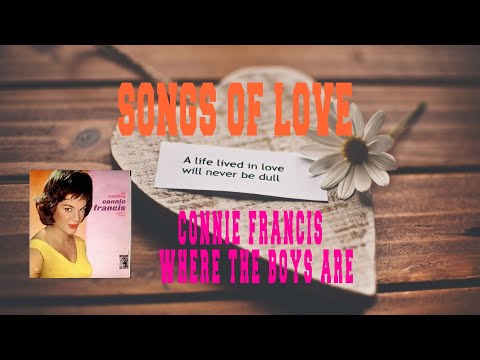
- Connie Francis
- Clotheo
- Hetty and the Jazzato Band
- Italian Tenors
- 101 Strings Orchestra
That’s Amore may also refer to:
- That’s Amore (game show), a short-lived 1992-1993 American adaptation of Italian program C’eravamo tanto amati (We Loved Each Other So Much)
- That’s Amore! (TV series), a short-lived 2008 spinoff of MTV reality dating show A Shot at Love with Tila Tequila
101 Strings Orchestra - “That’s Amore” (The White Lotus), a 2022 TV episode
- That’s Amore! (film), an upcoming American musical romantic comedy film
- That’s Amore Italian Cafe
- “That’s Amorte“, a 2023 episode of Rick and Morty
- “That’s Not Amore!“, a 2022 episode of Summer House
- The song, That’s Amore first appeared in the soundtrack of the Martin and Lewis comedy film The Caddy, released by Paramount Pictures on August 10, 1953.
The Caddy (Film)
| The Caddy | |
|---|---|
| |
| Directed by | Norman Taurog |
| Screenplay by | Danny Arnold Edmund Hartmann Ken Englund (additional dialogue) |
| Story by | Danny Arnold |
| Produced by | Paul Jones |
| Starring | Dean Martin Jerry Lewis Donna Reed Barbara Bates |
| Cinematography | Daniel L. Fapp |
| Edited by | Warren Low |
| Music by | Joseph J. Lilley |
| Production company | York Pictures Corporation |
| Distributed by | Paramount Pictures |
| Release date | August 10, 1953 |
| Running time | 95 minutes |
| Country | United States |
| Language | English |
| Budget | $1,864,112 |
| Box office | $3.5 million (US) 1,008,197 admissions (France) |
The Caddy is a 1953 American musical–comedy–sports film starring the comedy team of Martin and Lewis. It is noteworthy for Dean Martin introducing the hit song “That’s Amore“.
Plot
Harvey Miller, whose father was a famous golf pro, is expected to follow in his footsteps, but Harvey is afraid of crowds. Instead, at the advice of his fiancée Lisa, Harvey becomes a golf instructor. Lisa’s brother Joe becomes Harvey’s first client and becomes good enough to start playing in tournaments, with Harvey tagging along as his caddie. They encounter Kathy, a wealthy socialite, who is helping to organise one of the tournaments and there is an immediate attraction between her and Joe.
Joe’s success goes to his head and he begins to treat Harvey as a hindrance. They begin to quarrel and cause a disruption at a tournament, causing Joe to be disqualified. However, a talent agent witnesses the comical spectacle and advises that they go into show business.
Harvey conquers his fear and they become successful entertainers. At the end, Harvey and Joe meet up with another comedy team who look just like them: the real Martin and Lewis.
Cast
- Dean Martin as Joe Anthony
- Jerry Lewis as Harvey Miller Jr.
- Donna Reed as Kathy Taylor
- Barbara Bates as Lisa Anthony
- Joseph Calleia as Papa Anthony
- Fred Clark as Mr. Baxter aka Old Skinhead
- Clinton Sundberg as Charles, Butler
- Howard Smith as Golf Official
- Marshall Thompson as Bruce Reeber
- Marjorie Gateson as Mrs. Grace Taylor
- Frank Puglia as Mr. Spezzato
- Lewis Martin as Mr. Taylor
- Argentina Brunetti as Mama Anthony
- John Gallaudet as Jonathan Bell
- William Edmunds as Caminello
- Henry Brandon as Mr. Preen
- Tom Harmon as himself (Golf Announcer)
- Nancy Kulp as Emma, Drunk’s Wife
This movie is notable for cameo appearances by some of the leading professional golfers of the era (all playing themselves), including Ben Hogan, Sam Snead, Byron Nelson, and Julius Boros.
Production
Filming
It was filmed from November 24, 1952 through February 23, 1953 and was released by Paramount Pictures on August 10, 1953. It was later re-released in 1964 on a double bill with another Dean Martin and Jerry Lewis picture, You’re Never Too Young (1955).
This was the team’s first film since At War with the Army (1950) to be produced by their own production company, York Pictures Corporation. During shooting, on January 8, 1953 production was suspended for 23 days when Lewis entered Cedars of Lebanon Hospital with a fever. The movie became Martin and Lewis’ most expensive to date.
Music
The score for the film includes the hit “That’s Amore“, sung by Dean Martin. It was nominated for an Oscar for Best Original Song, but lost to “Secret Love” from Calamity Jane.
Promotion
The team made a promotional radio message for the movie. Several outtakes, available on The Golden Age of Comedy: Dean Martin and Jerry Lewis CD, feature Dean and Jerry trying to get through five lines of dialogue. When either one of them messed up a line, they exchanged several lines of profanity.
Reception
On Rotten Tomatoes, the film holds an 83% rating from six reviews, with an average score of 5.8/10.
Home media
The film was included on an eight-film DVD set, the Dean Martin and Jerry Lewis Collection: Volume One, released on October 31, 2006.
Impact
The career of Donna Reed began a huge upswing following the release of The Caddy. Five days prior to the film’s release, Columbia Pictures released From Here to Eternity, which won Reed an Academy Award for Best Supporting Actress.
















)
Comments